
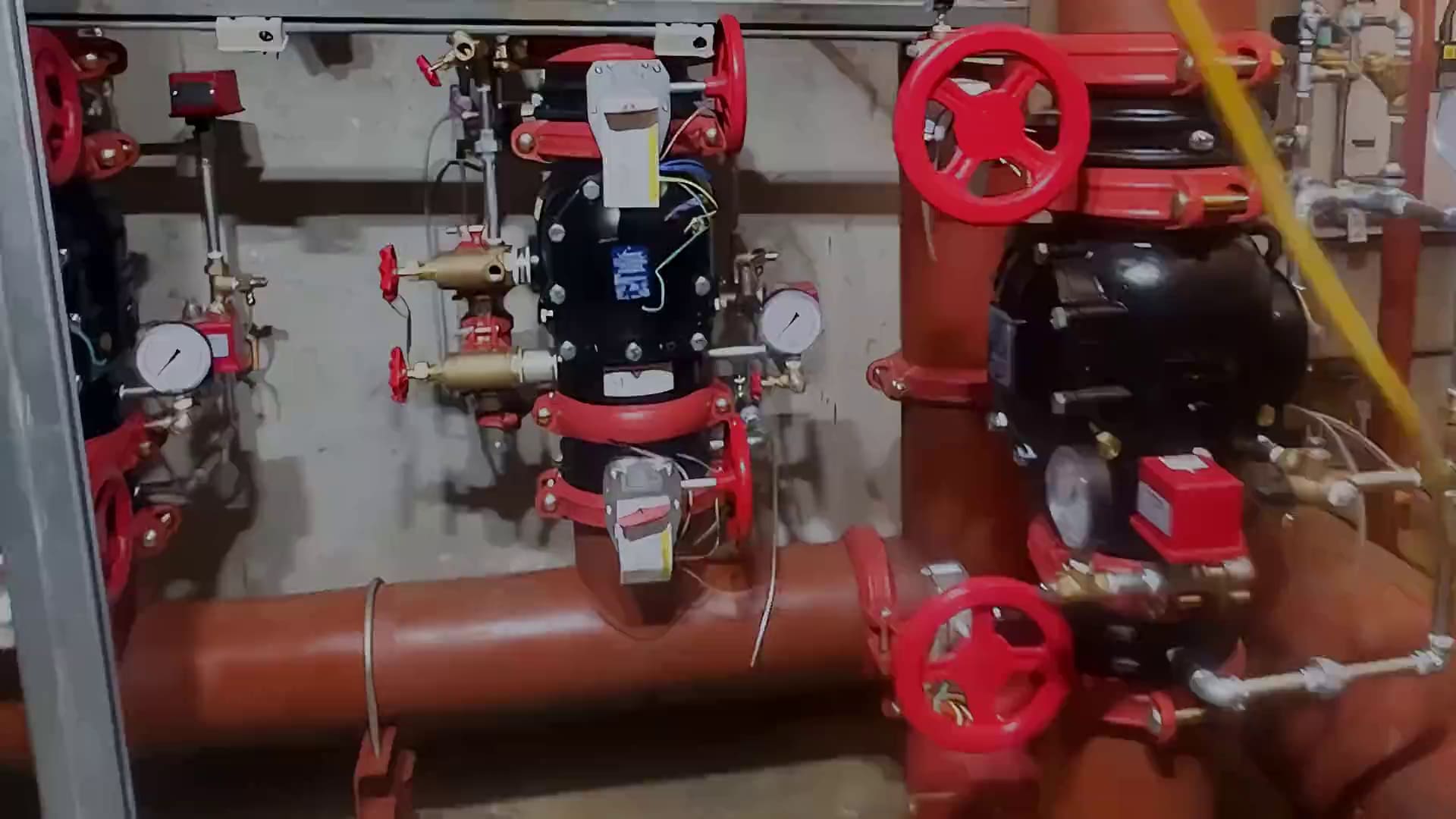
Care home sprinkler systems in Kettering
Care home sprinkler systems to BS 9251 and BS EN 12845, installed and serviced around the residents, with a record that has no gaps.
- ISO 9001, the certification insurers look for
- BS 9251 · BS EN 12845
- Free survey, fixed price in writing, no travel charge
What is different about care homes
Care home sprinkler systems usually come to us with a new home, a CQC or fire authority question, or a system nobody has a complete record for. Sentry Sprinkler Protection installs and services sprinkler systems for care homes, to BS 9251 and BS EN 12845. Care homes are the building type where sprinklers do most of their work, because the fire strategy cannot lean on everybody leaving quickly. That makes the system less optional in practice than the regulations alone suggest, and it makes the maintenance record something you are asked for rather than something you file.
-
Evacuation strategy is the reason
Progressive horizontal evacuation depends on the compartment holding long enough to move people sideways rather than out. Suppression is what buys that time, which is why a fire risk assessment for a care home reaches a different conclusion than the same assessment on an office of the same size.
-
Residential standard, commercial rigour
Most care home systems are designed to BS 9251. The regime still has to be documented to the standard a commercial inspector expects, and the two are easy to confuse: residential design does not mean informal maintenance.
-
Working around residents
Testing makes noise, and isolation changes what the building is operating under. Both are manageable and neither is something to discover on the day. We agree the alarm handling and the isolation window with the home before the visit.
-
The record is asked for, not filed
Care homes get inspected by more bodies than most buildings, and the sprinkler record is one of the documents that comes out. A complete log with no gaps is worth more at that moment than any amount of recent work.
What we do for these buildings
- BS EN 12845 Sprinkler servicing The full BS EN 12845 routine, from the weekly gauge and alarm check to the annual service. Fire sprinkler servicing
- BS EN 12845 and BS 9251 Design and installation New systems, extensions and upgrades, designed, installed and commissioned. Fire sprinkler installation
- Any hour 24/7 emergency A leak, a failed pump or a discharged head, answered out of hours. Emergency sprinkler repair
- BS EN 12845 Fire pumps Electric and diesel sets proved under flow, not just started and signed off. Fire pump servicing
From first call to certificate
Four steps, the same on every job.
-
 01
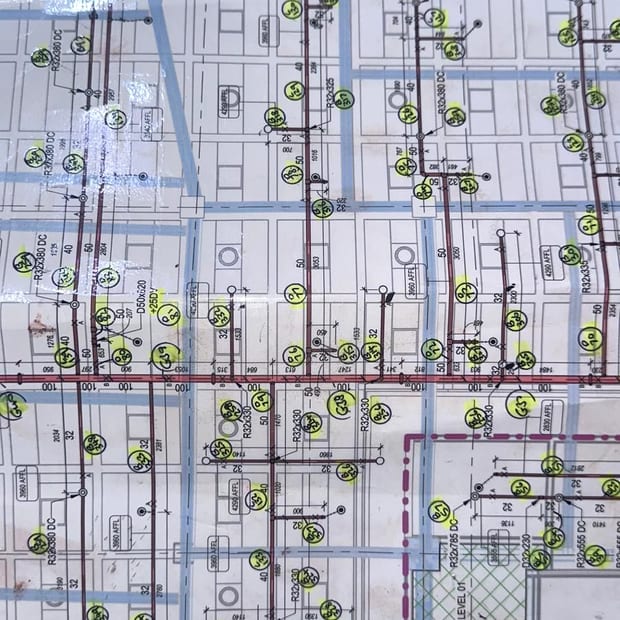
Free survey
We look at the building and its records, and tell you what it is due.
-
 02
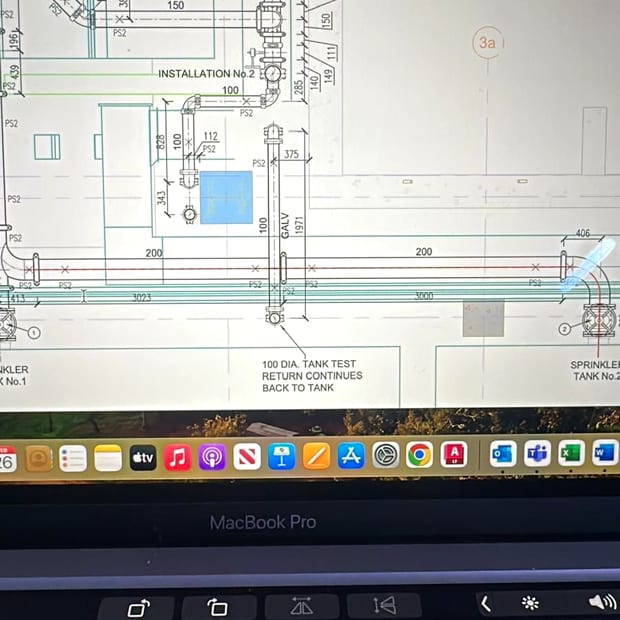
Fixed price in writing
Every item priced line by line. No survey fee, nothing added afterwards.
-
 03
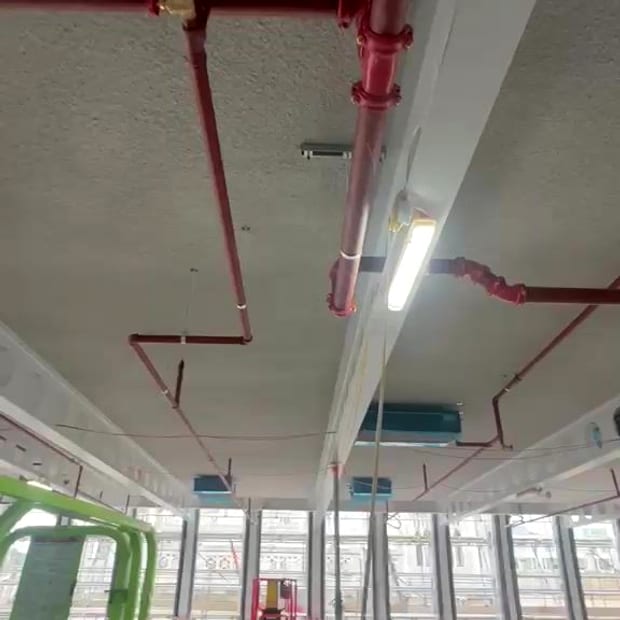
The work, on your dates
Isolation agreed before anyone arrives, kept as short as the job takes.
-
 04
Certificate and record
A certificate and a photographed defect list, ready for your insurer.
- Start
Book the free survey
Tell us the building. We will tell you what it is due.
Book a free survey
Free survey · fixed price in writing
Tell us what you need. We will tell you what it takes.
Four quick taps and your details. A free survey and a fixed price in writing, with no survey fee and no obligation.
Mon to Fri, 7am to 5pm. Emergencies any hour.
Request received
We’ve got it from here.
Step 1 of 5 is done. Here is how the rest goes.
- Request sent Done
- 2 We call you Next
- 3 Free survey
- 4 Fixed price
- 5 Work done
Care homes: questions
Are sprinklers a legal requirement in care homes?
It depends on when the building was built and where it is. New care homes in England have expectations under Approved Document B, Scotland has required them in new care homes for far longer, and Wales requires them in almost all new residential buildings. For an existing home there is no blanket retrofit duty in England, but a fire risk assessment can conclude that the building needs them, and for a care home that conclusion is reached more often than for most building types.
How do you test without alarming residents?
By agreeing it first. The alarm handling, who needs telling, which parts make noise and when the quiet periods are all get settled before the visit rather than on the day. Most of the routine is non-intrusive; the parts that are not can usually be scheduled around the home rather than the other way round.
Can the system be worked on while the home is occupied?
Yes, and it almost always has to be. What matters is that the isolation is planned, kept as short as the work genuinely takes, and that the home knows what its fire strategy is operating on while it is down. Where the system has zone valves, one wing can be isolated while the rest stays in service.
We are a small home. Is this proportionate?
The regime scales with the system, not with the number of beds. A small home with one valve set and a modest head count is a short visit and a simple record. What does not scale down is the documentation: a small home gets asked for the same log as a large one.
Do you install care home sprinkler systems as well as service them?
Yes. Care home sprinkler installation, new systems and extensions alike, is designed to BS 9251 and planned around the residents in the same way as a service visit: the isolation and the alarm handling agreed with the home before anybody arrives, and kept as short as the work takes.
Worth reading first
- Compliance When does a UK building legally need sprinklers? In England, new blocks of flats over 11 metres must have sprinklers, and Wales requires them in almost all new homes. Beyond those thresholds, sprinklers are required by building control, by the fire strategy, or by an insurer rather than by a single national rule.
- Sprinklers How often should sprinklers be serviced? Under BS EN 12845, sprinklers are checked weekly by the site, checked monthly for water and fuel, tested quarterly, given an interim contractor service every six months and a full service once a year, with the pump proved under flow.
- Compliance What your insurer actually wants from a sprinkler system Insurers price a sprinkler system as risk mitigation only if they can trust it. Who installed it, what it was designed to and an unbroken maintenance record are what make it count.
The published documents behind this page
Every interval and threshold on this page comes from one of these. Links go to the publisher, not to a copy of the document.
- BS 9251Fire sprinkler systems for domestic and residential occupancies. Code of practice
The residential equivalent: blocks of flats, care homes, student accommodation and houses.
BSI
- BS EN 12845Fixed firefighting systems. Automatic sprinkler systems. Design, installation and maintenance
The standard commercial and industrial sprinkler systems are designed, installed and maintained to. It sets the weekly, monthly, quarterly and annual routines.
BSI
British Standards are copyright documents and most are bought rather than read free. We hold the ones we work to. If you need to know what one of them says about your building, ask us rather than buying it.
A care home sprinkler system, in 3D
Residents who cannot get themselves out are why the system matters most here. Start a fire and watch it work.
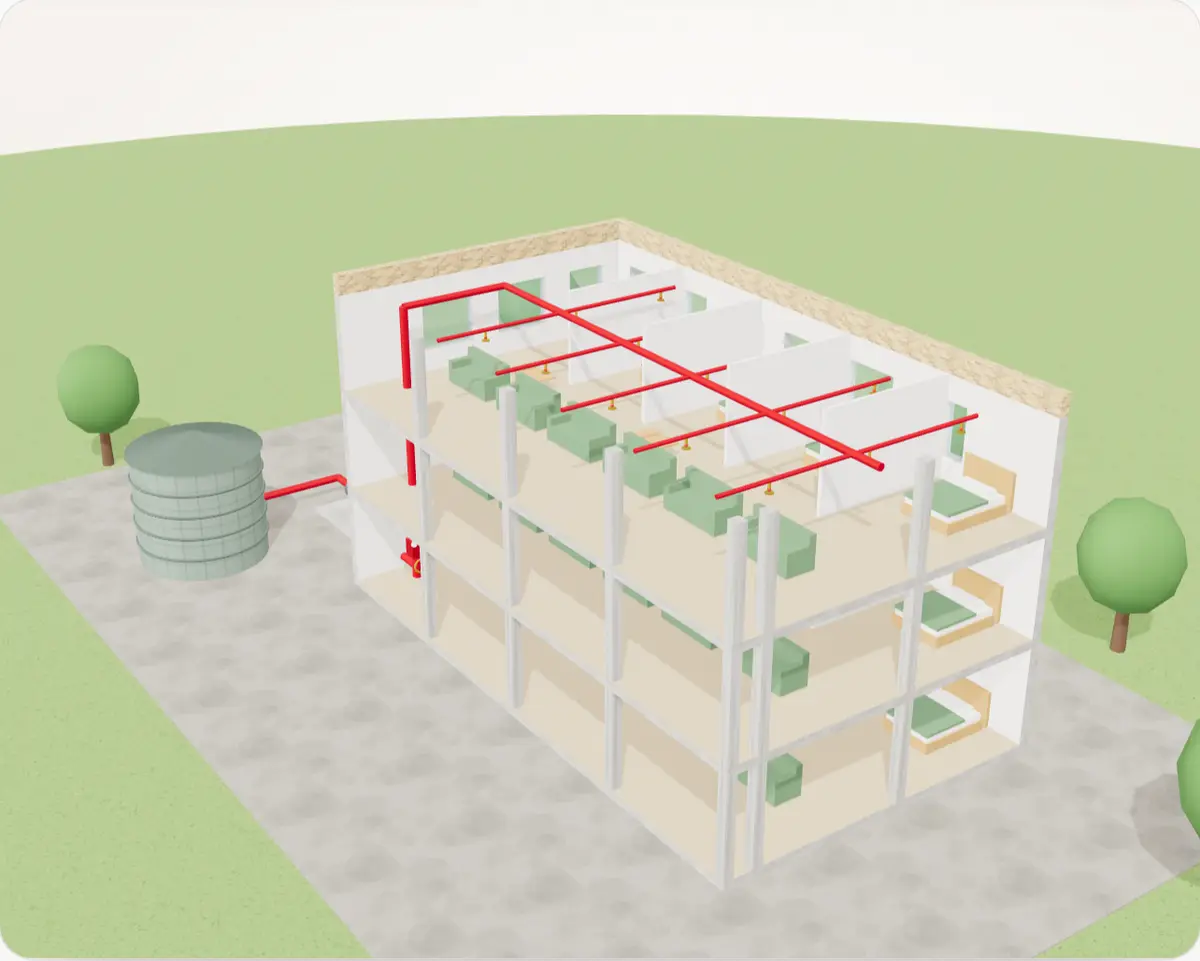
Illustration only. Not a design.
- The bulb over the fire bursts at 68°C. Only that head opens.
- Water moves through the valve set: the gong rings and the flow switch raises the alarm.
- The pressure drops and the fire pump starts.
- Water reaches the open head and the spray holds the fire back.
- The fire is held in check until the brigade arrives.
- The brigade connects to the riser and takes water to the fire floor.
- With no sprinklers, nothing acts on the fire until the brigade arrives.
Drag to turn it. Ctrl + scroll to zoom. Click any part to see what it is.
Your system
What it needs
- Weekly tank level check, pump start test, alarm motor test, system checks
- Quarterly flow switch and alarm test
- Annual tank inspection and clean, pump performance test under flow, valve set strip, clean and rebuild, full service
Illustration only. This model shows how a fire sprinkler system works. It is not a design for any real building, and the layout, pipe sizes, head spacing, water supply and riser positions in it are not the ones your building would need. Every real system is designed for its building after a survey, to BS EN 12845, BS 9251 or BS 9990.
Certified, and audited on a schedule.
ISO 9001, certified by BRE Global and accredited by UKAS. Somebody independent audits how every job is planned, recorded and signed off, on a schedule.

ISO 9001:2015
Certified by BRE Global, accredited by UKAS
An audited quality management system. It means the way a job is planned, recorded and signed off is itself inspected by somebody independent, on a schedule.
Working to BS EN 12845, BS 9251 and BS 9990. If your insurer or fire risk assessor wants the certificates themselves, ring us and we will send them over.
5.0 on Google
3 reviews, and every one of them five stars.
-
Lewis W. Sprinkler installation, warehouse Had them install a full sprinkler system across one of our warehouses, and couldn't be happier. They were professional from start to finish and the on-site team were genuinely friendly to work with. […] Highly recommend if you would need your building or warehouse properly fire-protected.
5 stars on Google
-
Mike C. Weekly maintenance, testing and repair Sentry Sprinkler Protection have recently taken over the weekly maintenance, testing and repair of the […] sprinkler equipment. They are providing a excellent service, good value and they are also very helpful when on site.
5 stars on Google
-
Sam E. Sprinkler pipework installation Couldn't recommend [Sentry] enough. Their work ethic, consistent efficient install of the pipework and overall approach to a project should be something every sub-contractor strives to mirror. Marius is incredibly approachable and methodical in his work with laydown areas kept very neat and tidy and all work carried out in a safe manner.
5 stars on Google
Tell us the building. We will tell you what it is due.
No survey fee to find out where you stand. Describe the site and we will tell you which intervals apply and what the visit involves.
Request received
We’ve got it from here.
Step 1 of 5 is done. Here is how the rest goes.
- Request sent Done
- 2 We call you Next
- 3 Free survey
- 4 Fixed price
- 5 Work done