
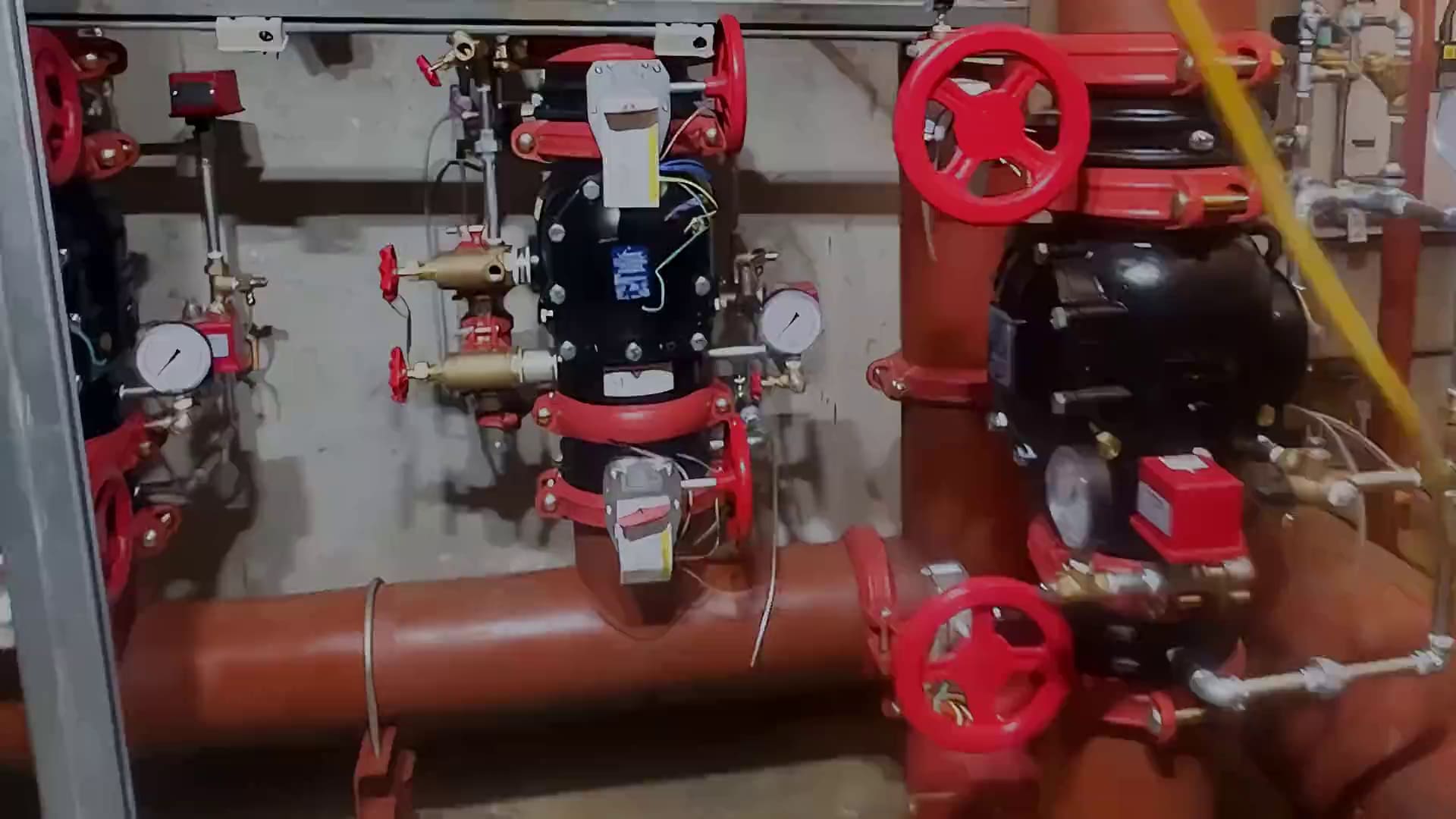
NFPA sprinkler standards in UK buildings
A US parent company, an American insurer, or a specification that arrived from head office written to NFPA 13 rather than BS EN 12845.
NFPA standards are American. They appear in UK buildings when the occupier or the insurer is US-based and specifies them instead of the British route. NFPA 13 covers sprinkler installation, NFPA 20 covers fire pumps and NFPA 25 covers inspection, testing and maintenance. Sentry Sprinkler Protection designs and tests to NFPA 13 where a US-owned occupier asks for it alongside the British standards.
NFPA standards, chiefly NFPA 13, NFPA 20 and NFPA 25 Published by National Fire Protection Association (USA)
What NFPA actually requires
A specification written to NFPA in a British building is not a mistake and not unusual. It normally means the occupier is American-owned and their insurer is more comfortable with the standards they know. What it does mean is that the design basis, the terminology and the maintenance schedule are all different from the British ones.
-
NFPA 13 is the installation standard
It is the American counterpart to BS EN 12845, and it is the one most specifications name. It sets its own hazard classifications, design densities and water supply requirements, and they do not map one to one onto the British classifications.
-
NFPA 25 is the one that governs your maintenance
Inspection, testing and maintenance of water-based fire protection systems sits in NFPA 25, not in NFPA 13. If your system was installed to NFPA, this is the document your service intervals should be coming from, and it is the one most often overlooked once the installer has left.
-
NFPA 20 covers the fire pump
Stationary pumps for fire protection have their own standard, with its own testing regime. On an NFPA site the pump is frequently the item where the British routine has quietly been applied to an American installation.
-
It arrives through insurance, not through Building Regulations
Nothing in UK regulation requires NFPA. It is a contractual requirement, so the question is never whether it is legal but whether it is what your policy and your specification actually asked for.
Where it applies
- UK sites owned by US parent companies
- Premises insured through American insurers
- Buildings whose specification was written by a US head office
- Systems already installed to NFPA that now need servicing to NFPA 25
Not sure whether this is the standard your building is held to?
It is a survey question rather than a paperwork one, and it is free. We read the specification and the policy rather than assuming the default.
What we do to this standard
- BS EN 12845 Sprinkler servicing The full BS EN 12845 routine, from the weekly gauge and alarm check to the annual service. Fire sprinkler servicing
- BS EN 12845 and BS 9251 Design and installation New systems, extensions and upgrades, designed, installed and commissioned. Fire sprinkler installation
- BS EN 12845 Fire pumps Electric and diesel sets proved under flow, not just started and signed off. Fire pump servicing
NFPA: questions
Can a UK building have an NFPA sprinkler system?
Yes, and a fair number do. It is normal where the occupier is American-owned and the insurer specifies the standards they are familiar with. Nothing in UK regulation requires NFPA and nothing forbids it: it arrives as a contractual requirement rather than a regulatory one, so what matters is that the building is served by whichever basis the specification and the policy actually named.
Our system was installed to NFPA 13. What standard should it be serviced to?
NFPA 25, which covers inspection, testing and maintenance of water-based fire protection systems. This is worth checking, because a system installed to NFPA and then handed to a contractor working from the British schedule ends up on the wrong intervals with the wrong tests recorded. The certificate will look fine and the regime underneath it will not match the system.
Do you work to NFPA as well as the British standards?
Yes, where a client requires it. Most of our work is BS EN 12845 and the LPC Rules, which is what the majority of UK commercial buildings are built and insured to, but where a specification or an insurer names NFPA we design and test to it. The important thing is that one basis is chosen and followed rather than the two being mixed.
How does NFPA 13 differ from BS EN 12845?
They set out to do the same job and arrive by different routes. Both classify hazards and set a design density and a water supply against that classification, but the classifications themselves, the terminology and the detailed rules differ, so a system that satisfies one is not automatically a system that satisfies the other. That is why converting an existing design between the two is a design exercise rather than a paperwork one.
Worth reading next
- Compliance What your insurer actually wants from a sprinkler system Insurers price a sprinkler system as risk mitigation only if they can trust it. Who installed it, what it was designed to and an unbroken maintenance record are what make it count.
- Sprinklers How often should sprinklers be serviced? Under BS EN 12845, sprinklers are checked weekly by the site, checked monthly for water and fuel, tested quarterly, given an interim contractor service every six months and a full service once a year, with the pump proved under flow.
- Fire pumps Fire pump testing: why starting it is not testing it A start test proves the starter, the battery and the controller. Only a flow test proves the pump delivers its rated flow at its rated pressure, which is the only thing that matters in a fire.
The published documents behind this page
We work to these. Where a figure on this page comes from one of them, this is where to check it.
- NFPA 13NFPA 13, Standard for the Installation of Sprinkler Systems
The American sprinkler standard. Not UK law, but it is what a US parent company, a US insurer or a US-designed warehouse rack layout will have been specified to.
National Fire Protection Association
- NFPA 20NFPA 20, Standard for the Installation of Stationary Pumps for Fire Protection
The American fire pump standard, with its own testing regime. On an NFPA site the pump is the item most often tested to the British routine by mistake.
National Fire Protection Association
- NFPA 25NFPA 25, Standard for the Inspection, Testing, and Maintenance of Water-Based Fire Protection Systems
The one that governs maintenance on an NFPA system. If your system was installed to NFPA 13, your service intervals come from here rather than from NFPA 13 itself, which is the detail most often missed once the installer has left.
National Fire Protection Association
- BS EN 12845Fixed firefighting systems. Automatic sprinkler systems. Design, installation and maintenance
The standard commercial and industrial sprinkler systems are designed, installed and maintained to. It sets the weekly, monthly, quarterly and annual routines.
BSI
British Standards are copyright documents and most are bought rather than read free. We hold the ones we work to. If you need to know what one of them says about your building, ask us rather than buying it.
Certified, and audited on a schedule.
ISO 9001, certified by BRE Global and accredited by UKAS. Somebody independent audits how every job is planned, recorded and signed off, on a schedule.

ISO 9001:2015
Certified by BRE Global, accredited by UKAS
An audited quality management system. It means the way a job is planned, recorded and signed off is itself inspected by somebody independent, on a schedule.
Working to BS EN 12845, BS 9251 and BS 9990. If your insurer or fire risk assessor wants the certificates themselves, ring us and we will send them over.
Tell us the building. We will tell you what it is due.
No survey fee to find out where you stand. Describe the site and we will tell you which intervals apply and what the visit involves.
Request received
We’ve got it from here.
Step 1 of 5 is done. Here is how the rest goes.
- Request sent Done
- 2 We call you Next
- 3 Free survey
- 4 Fixed price
- 5 Work done