
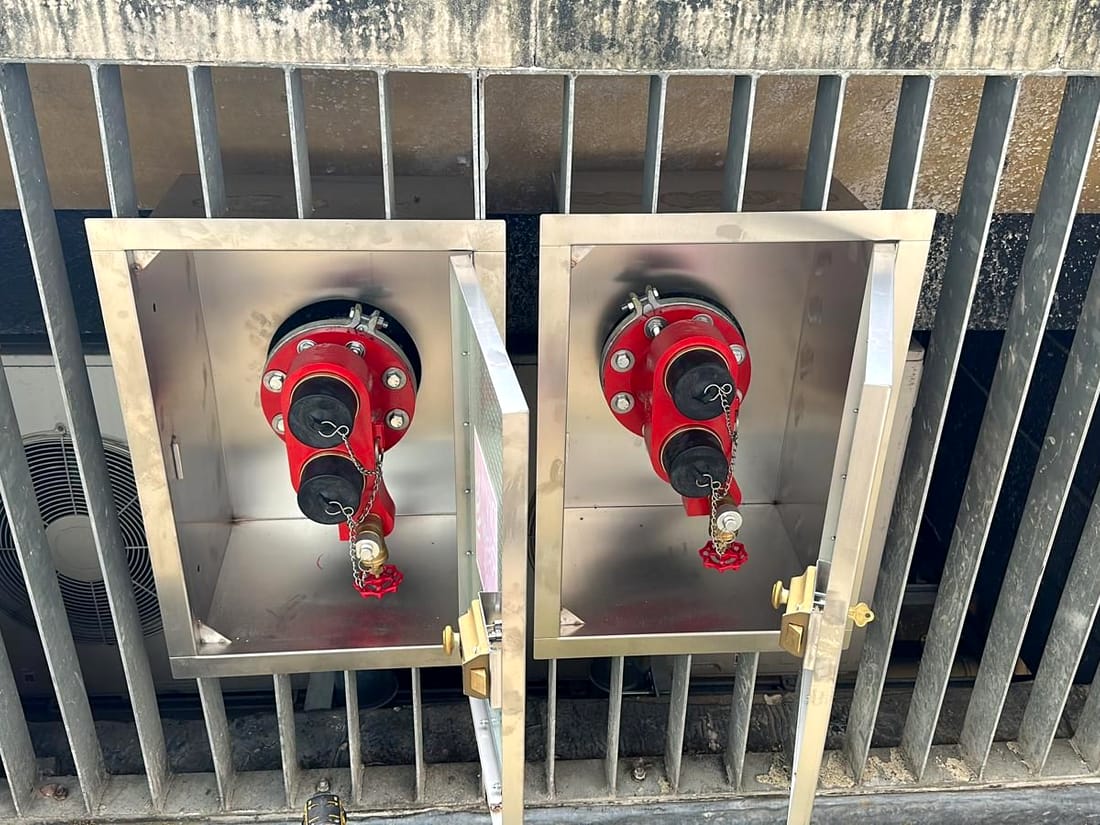
Dry riser testing in Kettering
Dry riser testing usually comes up when the last certificate is about to run out, or the fire officer has asked to see it.
- Four years of active trading, 100+ projects completed
- ISO 9001, the certification insurers look for
- Free survey, fixed price in writing, no travel charge
Our own jobs. Swipe, or tap to enlarge.
Dry riser testing under BS 9990 means a visual inspection every six months and a pressure test once a year. The annual test charges the riser to 12 bar and holds it for 15 minutes. Inlets, landing valves, cabinets, caps and signage are all part of the inspection. Sentry Sprinkler Protection carries out dry riser testing across England from its base in Kettering, ISO 9001 certified.
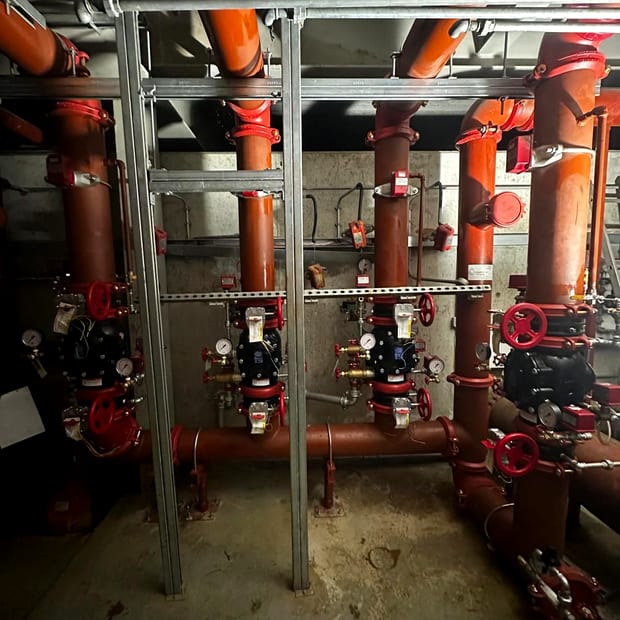
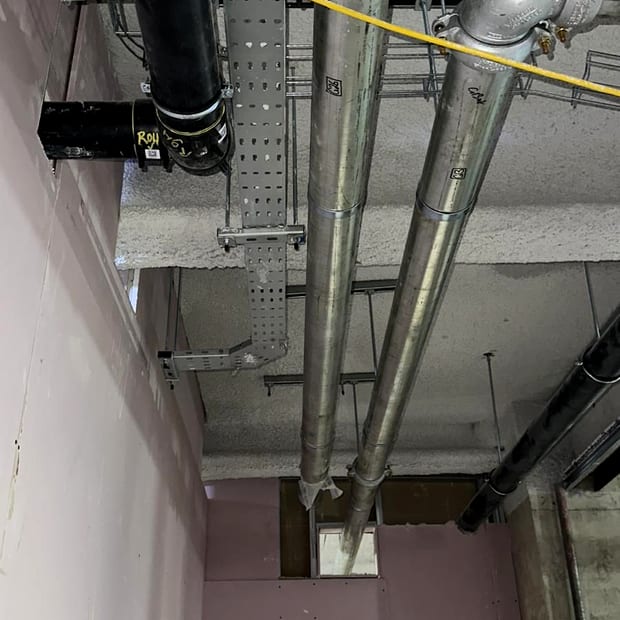
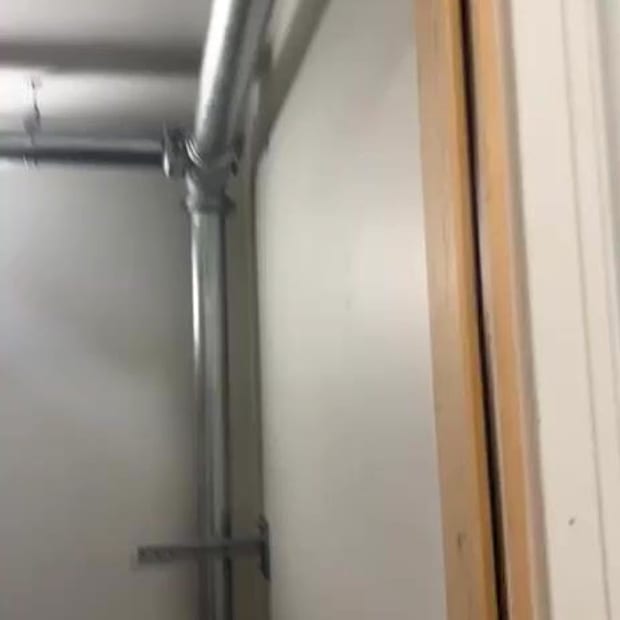
Dry risers, on our jobs
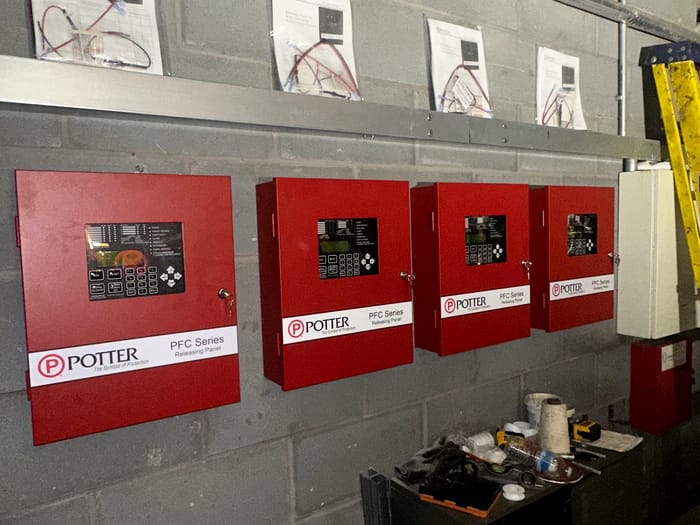
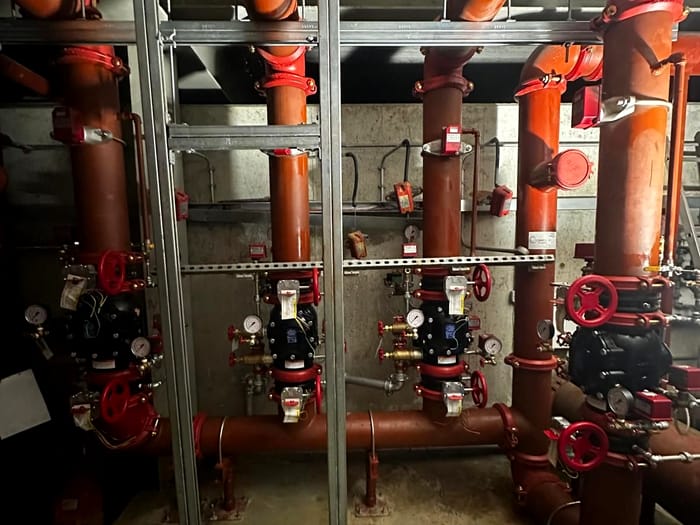
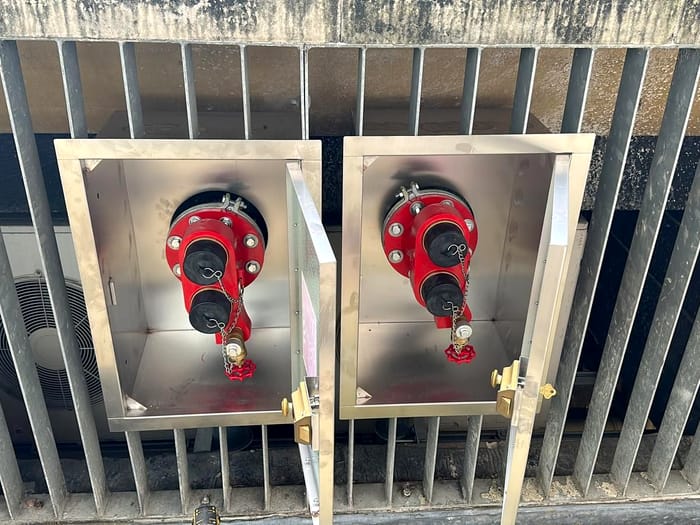
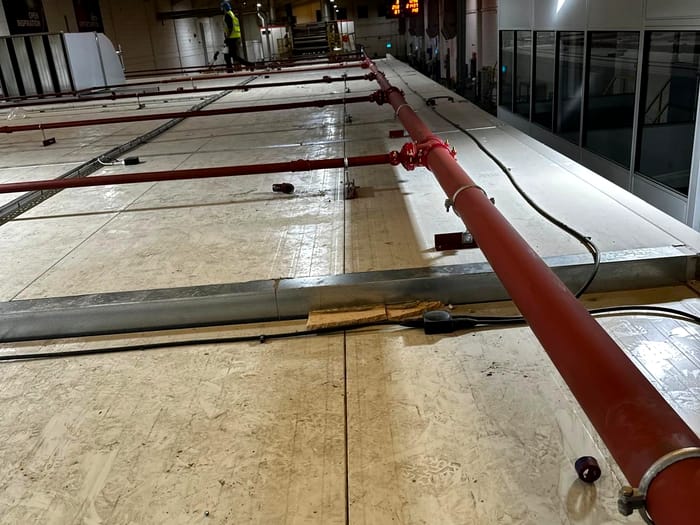
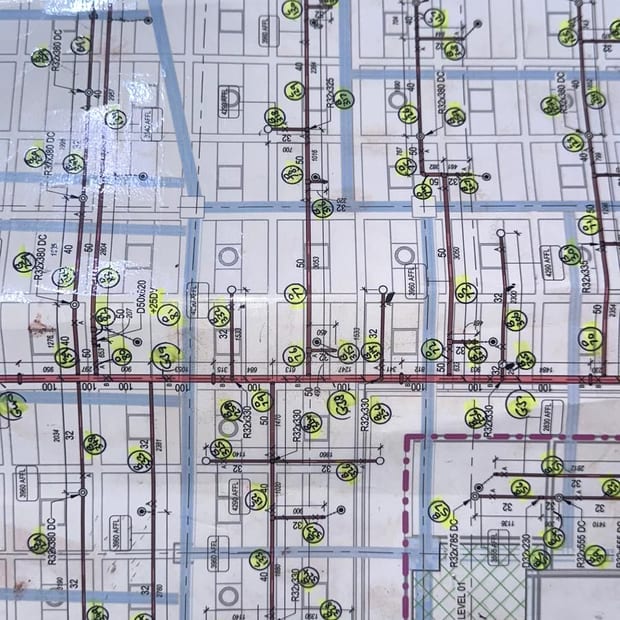
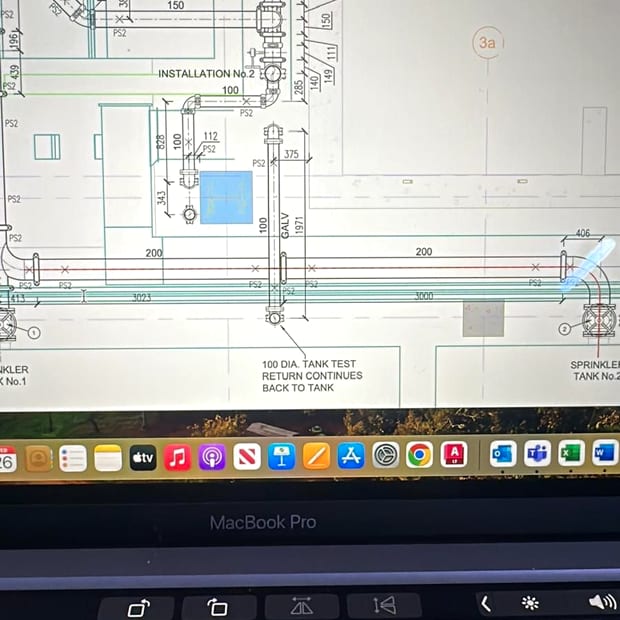
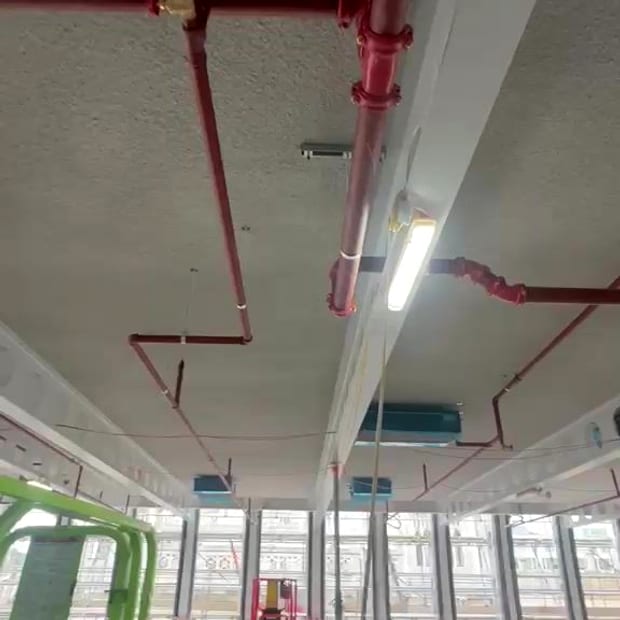
5 photographs of this exact work, from the owner's own sites. Tap any of them.
- SurveyFree, and we walk the building
- Fixed priceIn writing, with the standard named
- First visitDone, recorded and certificated
From first call to certificate
Four steps, the same on every job.
-
 01
01Free survey
We look at the building and its records, and tell you what it is due.
-
 02
02Fixed price in writing
Every item priced line by line. No survey fee, nothing added afterwards.
-
 03
03The work, on your dates
Isolation agreed before anyone arrives, kept as short as the job takes.
-
 04
04Certificate and record
A certificate and a photographed defect list, ready for your insurer.
- Start
Book the free survey
Tell us the building. We will tell you what it is due.
Book a free survey
Covered on every visit
BS 9990
- Six-monthly visual inspection of inlets, landing valves (the outlets on each floor), cabinets, caps and signage
- Annual wet test: the riser charged to 12 bar and held for 15 minutes
- Leak, blockage and vandalism findings reported with photographs
- Repairs, replacement valves and new installations
When it is due
- Six-monthly visual inspection
- Annual pressure test at 12 bar
The duty sits with whoever controls the premises under the Fire Safety Order 2005. It can be delegated as work, not as responsibility, which is why the certificate matters as much as the visit. How compliance works
What actually goes wrong with a dry riser
A dry riser is simple, which is exactly why it gets neglected. It does nothing for years and there is nothing to watch. These are the four faults that fail a test.
-
The inlet is not usable when it is needed
Missing or seized blank caps, a broken glass panel, a padlock nobody has the key to, or a cabinet obstructed by parked vehicles or bin stores. The pipework can be perfect and the riser is still useless if a fire crew cannot couple to it in the dark.
-
Landing valves seized or passing
Outlet valves are operated once a year at most. They seize, and the washers perish, so the valve either will not open or will not shut off. On an occupied floor a passing landing valve also means water where nobody wants it during the test itself.
-
Water left standing in a dry riser
The air valve at the top and the drain at the bottom exist so the riser empties after use or after a test. When they do not work, water sits in the main and corrodes it from the inside. This is how a riser that passed five years ago fails at a joint.
-
It does not hold 12 bar
The annual test is a pressure test at 12 bar held for 15 minutes under BS 9990, and a riser that leaks at a joint or a valve fails it. Better to find that on a planned visit with the building prepared than at two in the morning with a fire crew attached to it.
Specific jobs
- Dry riser repairs Landing valves, inlets, cabinets and leaking joints, fixed and retested to 12 bar.
- Dry riser installation New dry risers for new builds, conversions and extensions, tested to 12 bar at handover.
- Dry riser testing for managing agents Every block inspected and tested on one schedule, certificates issued on the day.
- Dry riser installation in Birmingham New dry risers for Birmingham towers and commercial buildings, tested to 12 bar at handover.
- Dry riser testing for housing associations Every block's dry riser inspected and tested on one schedule, certificates on file.
- Dry riser testing in London Six-monthly inspections and annual pressure tests on London towers, planned around access.
- Dry riser servicing in Birmingham Six-monthly inspections, annual tests and repairs on Birmingham risers.
Free survey · fixed price in writing
Tell us what you need. We will tell you what it takes.
Four quick taps and your details. A free survey and a fixed price in writing, with no survey fee and no obligation.
Mon to Fri, 7am to 5pm. Emergencies any hour.
Request received
We’ve got it from here.
Step 1 of 5 is done. Here is how the rest goes.
- Request sent Done
- 2 We call you Next
- 3 Free survey
- 4 Fixed price
- 5 Work done
Questions we get asked
How often does a dry riser have to be tested?
A visual inspection every six months and a full pressure test once a year, under BS 9990. The annual test charges the riser to 12 bar and holds it for 15 minutes.
What happens if it fails the test?
We report what failed with photographs, isolate anything unsafe and quote the repair. Common causes are perished washers, seized or missing landing valve caps, damaged inlet boxes and vandalism at ground level.
Who is responsible for having it done?
The responsible person for the premises under the Regulatory Reform (Fire Safety) Order 2005. In a managed block that is usually the freeholder or the managing agent, not the individual leaseholders.
Do I get a certificate?
Yes, on the visit. It is the document your fire risk assessment and your insurer will ask to see.
Where does the water come from for a dry riser test?
We bring it. A dry riser is an empty pipe, so the annual test needs a pump and a fire service approved hose to charge it to 12 bar and hold it there for 15 minutes. We arrive with the equipment; you need a water source on site and somewhere for the drain-down to go.
Do you need access to every floor when testing dry risers?
Yes, and it is the thing that most often derails a visit. Every landing valve, the outlet on each floor, is inspected and tested individually, so we need the cabinets unlocked and reachable on each level. If access is going to be a problem on a particular floor, tell us before the day rather than on it.
Our inlet breeching is in a locked cabinet on the street. Is that a problem?
Only if nobody can open it. The inlet is the one part the fire service uses and the one part most likely to have been painted over, blocked in by a bin store or lost its key. It gets checked on every visit and it is a common reason for a fail.
Read more about this
We also cover
Dry risers for your kind of building
The standard is the same. What changes is the hazard, the design and what an insurer asks to see.
- Blocks of flats Above 11 metres a new block needs them. Everything after that is the maintenance record, and it is what a managing agent gets asked for. Sprinkler systems for blocks of flats
- Offices Multi-let buildings where the landlord holds the common parts and the tenant holds the demise. Most of the trouble is the line between them. Office sprinkler systems in multi-let blocks
- Shopping centres Ordinary Hazard Group 3, and a building whose design changes every time a unit is re-let. The system rarely keeps up on its own. Shopping centre sprinkler systems
All our services The standards we work to Questions and answers
Dry riser testing, town by town
The towns where this is the work we are asked for most. Each page covers the buildings there and what the journey means for a visit.
- Dry riser testing in Birmingham B1 · 49 miles
- Dry riser testing in Watford WD17 · 53 miles
- Dry riser testing in Kettering NN14 · our base
- Dry riser testing in Rushden NN10 · 9 miles
- Dry riser testing in Leicester LE1 · 24 miles
- Dry riser testing in Peterborough PE1 · 24 miles
- Dry riser testing in Luton LU1 · 38 miles
- Dry riser testing in London EC1 · 66 miles
The published documents behind this page
Every interval and threshold on this page comes from one of these. Links go to the publisher, not to a copy of the document.
- BS 9990Non-automatic fire-fighting systems in buildings. Code of practice
Dry and wet risers, and private fire mains. The source of the six-monthly inspection and the annual pressure test.
BSI
- Approved Document BFire safety: Approved Document B
Statutory guidance to Part B of the Building Regulations. Volume 1 covers dwellings, Volume 2 everything else, and it is where the height thresholds that trigger sprinklers and risers actually live.
UK Government
British Standards are copyright documents and most are bought rather than read free. We hold the ones we work to. If you need to know what one of them says about your building, ask us rather than buying it.
See a dry riser at work, in 3D
Start a fire and watch the brigade charge the dry riser from the inlet up to the landing valve on the fire floor.
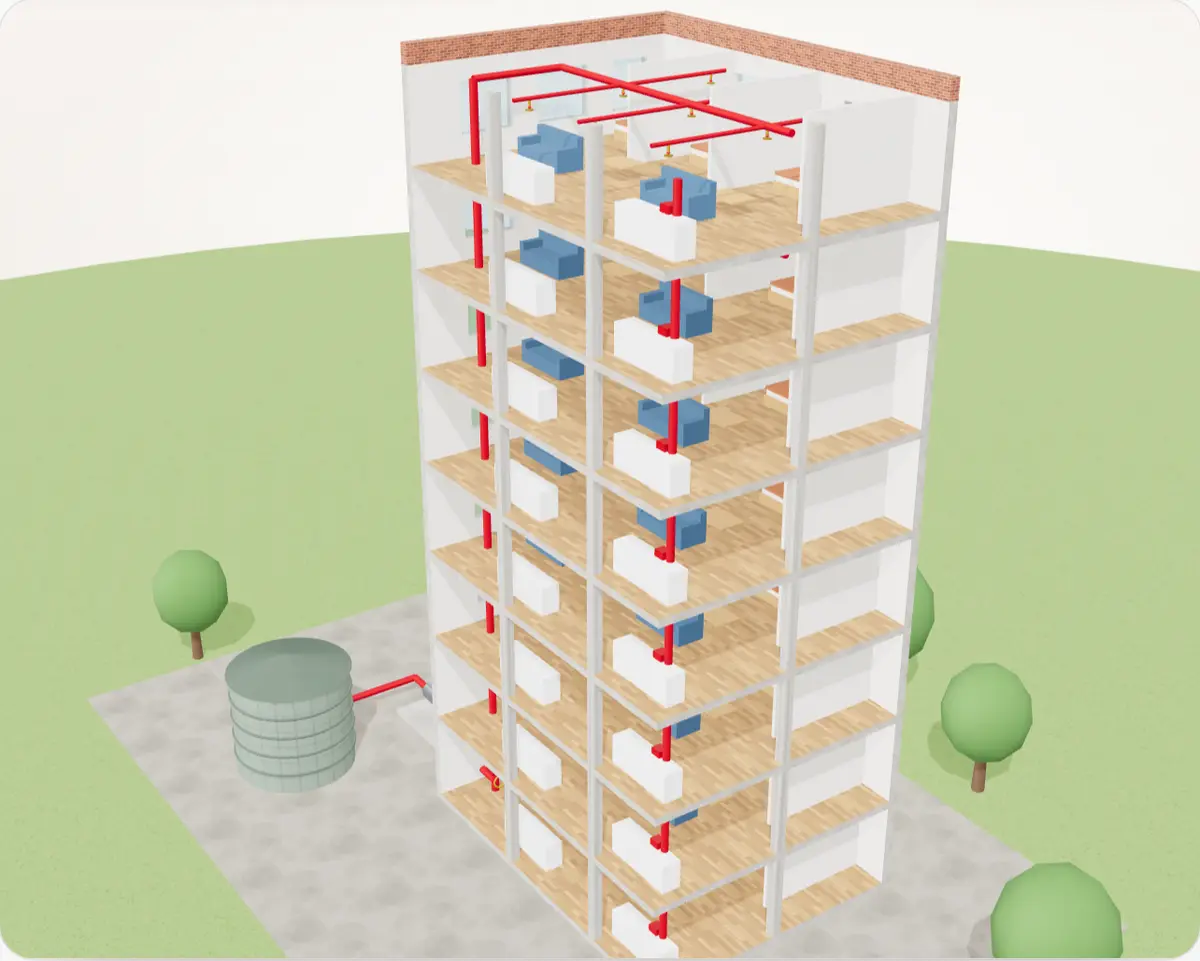
Illustration only. Not a design.
- The bulb over the fire bursts at 68°C. Only that head opens.
- Water moves through the valve set: the gong rings and the flow switch raises the alarm.
- The pressure drops and the fire pump starts.
- Water reaches the open head and the spray holds the fire back.
- The fire is held in check until the brigade arrives.
- The brigade connects to the riser and takes water to the fire floor.
- With no sprinklers, nothing acts on the fire until the brigade arrives.
Drag to turn it. Ctrl + scroll to zoom. Click any part to see what it is.
Your system
What it needs
- Weekly tank level check, pump start test, alarm motor test, system checks
- Quarterly flow switch and alarm test
- Six-monthly riser inspection
- Annual tank inspection and clean, pump performance test under flow, valve set strip, clean and rebuild, full service, riser pressure test at 12 bar, held for 15 minutes
Illustration only. This model shows how a fire sprinkler system works. It is not a design for any real building, and the layout, pipe sizes, head spacing, water supply and riser positions in it are not the ones your building would need. Every real system is designed for its building after a survey, to BS EN 12845, BS 9251 or BS 9990.
Certified, and audited on a schedule.
ISO 9001, certified by BRE Global and accredited by UKAS. Somebody independent audits how every job is planned, recorded and signed off, on a schedule.

ISO 9001:2015
Certified by BRE Global, accredited by UKAS
An audited quality management system. It means the way a job is planned, recorded and signed off is itself inspected by somebody independent, on a schedule.
Working to BS EN 12845, BS 9251 and BS 9990. If your insurer or fire risk assessor wants the certificates themselves, ring us and we will send them over.
5.0 on Google
3 reviews, and every one of them five stars.
-
Mike C. Weekly maintenance, testing and repair Sentry Sprinkler Protection have recently taken over the weekly maintenance, testing and repair of the […] sprinkler equipment. They are providing a excellent service, good value and they are also very helpful when on site.
5 stars on Google
-
Lewis W. Sprinkler installation, warehouse Had them install a full sprinkler system across one of our warehouses, and couldn't be happier. They were professional from start to finish and the on-site team were genuinely friendly to work with. […] Highly recommend if you would need your building or warehouse properly fire-protected.
5 stars on Google
-
Sam E. Sprinkler pipework installation Couldn't recommend [Sentry] enough. Their work ethic, consistent efficient install of the pipework and overall approach to a project should be something every sub-contractor strives to mirror. Marius is incredibly approachable and methodical in his work with laydown areas kept very neat and tidy and all work carried out in a safe manner.
5 stars on Google
Tell us the building. We will tell you what it is due.
No survey fee to find out where you stand. Describe the site and we will tell you which intervals apply and what the visit involves.
Request received
We’ve got it from here.
Step 1 of 5 is done. Here is how the rest goes.
- Request sent Done
- 2 We call you Next
- 3 Free survey
- 4 Fixed price
- 5 Work done