
Dry riser testing in London
Dry riser testing in London: six-monthly inspections and annual pressure tests under BS 9990, access planned before the day, certificate left after it.
- ISO 9001, the certification insurers look for
- Free survey, fixed price in writing, no travel charge
- Office Monday to Friday, 7am to 5pm; emergency line any hour
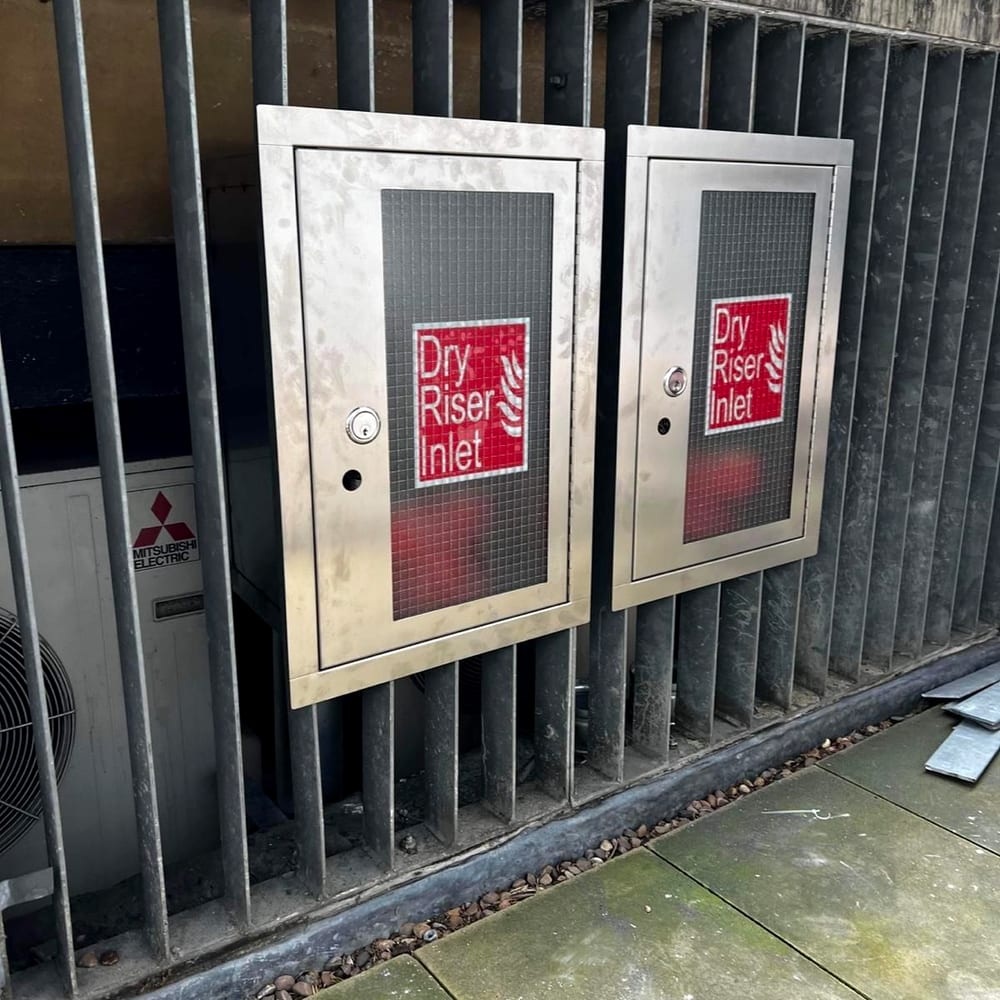
Dry riser testing in London means the six-monthly visual inspection and the annual pressure test under BS 9990, on the densest stock of tall buildings in the country. Above 18 metres a building needs a fire main, so residential towers, office blocks and hotels across the city carry one. We plan the access before the day and leave a certificate after it. Sentry Sprinkler Protection does this work across England from its base in Kettering, ISO 9001 certified.
What each visit covers
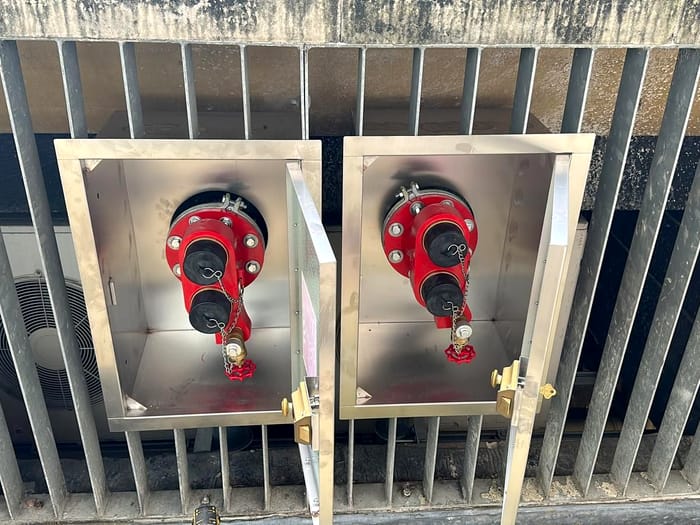
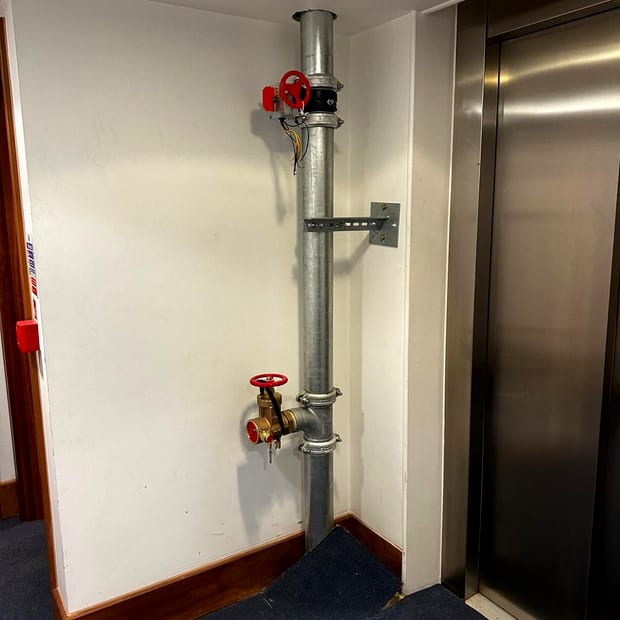
- Six-monthly: the inlet cabinet, inlet valves and caps, every landing valve, the air release valve, the drain and the signage, checked floor by floor.
- Annually: the riser filled with water and held at 12 bar for 15 minutes, with every landing valve opened and closed under pressure.
- Missing caps, seized valves and damaged cabinets photographed and listed, with a price per item.
- A certificate for the building file on the day.
Planned around the building, not the van
In central London the test is usually the easy part. Parking, permits, goods lifts and building management approval decide whether it happens, so we agree them in writing before the day. Where a lobby or a stair is busy in office hours, the pressure test goes early or late.
After the pressure test the riser is drained down, and the inlet and landing valves are left closed and capped.
Towers with more than one regime
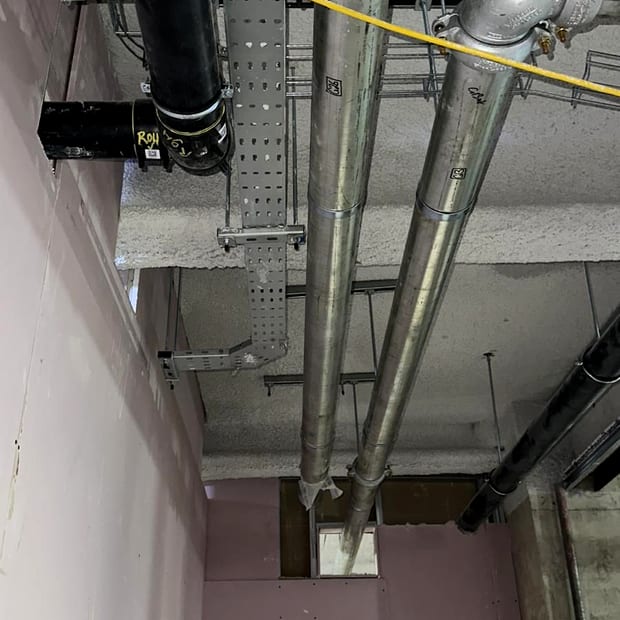
Many London residential and mixed-use towers have a dry riser, a BS 9251 sprinkler system and, above 50 metres, a wet riser too. Each has its own interval. We test them on one schedule, so a managing agent has one date and one record per block.
In a higher-risk building under the Building Safety Act those records belong in the golden thread of information, so every certificate names the riser, the floors and the result.
If the riser fails
London is roughly seventy-five miles from our base, so every visit is a planned job. A riser that fails is not left as a line on a report: the defects are priced item by item, repaired on a return visit, and the riser is tested again.
Related
- Commercial sprinkler maintenance in London Offices, hotels and car parks on a fixed BS EN 12845 schedule.
- Fire sprinkler installation in London Residential towers, fit-outs and car parks: designed, installed and commissioned.
- Wet riser systems in London Risers, pumps, break tanks and alarms in London towers, proved together.
- Dry riser testing Six-monthly inspection and the annual pressure test, with the certificate your fire risk assessment asks for.
- Fire sprinkler systems in London
- Wet riser or dry riser: which one is in your building?
- Areas we cover Every page in this list, grouped by job.
From first call to certificate
Four steps, the same on every job.
-
 01
Free survey
We look at the building and its records, and tell you what it is due.
-
 02
Fixed price in writing
Every item priced line by line. No survey fee, nothing added afterwards.
-
 03
The work, on your dates
Isolation agreed before anyone arrives, kept as short as the job takes.
-
 04
Certificate and record
A certificate and a photographed defect list, ready for your insurer.
- Start
Book the free survey
Tell us the building. We will tell you what it is due.
Book a free survey
Free survey · fixed price in writing
Tell us what you need. We will tell you what it takes.
Four quick taps and your details. A free survey and a fixed price in writing, with no survey fee and no obligation.
Mon to Fri, 7am to 5pm. Emergencies any hour.
Request received
We’ve got it from here.
Step 1 of 5 is done. Here is how the rest goes.
- Request sent Done
- 2 We call you Next
- 3 Free survey
- 4 Fixed price
- 5 Work done
Questions about dry riser testing in london
How often does a dry riser in London need testing?
The same as anywhere in England: a visual inspection every six months and a pressure test every year under BS 9990. What is different in London is how many buildings are tall enough to have one, and the planning it takes to get access.
Can you test the risers across a portfolio of London blocks?
Yes. Every riser goes on one schedule, so each block has a known test date, and the certificates come back in one format for the whole portfolio.
What usually makes a London dry riser fail its test?
Small things: a landing valve seized shut, a perished gasket that weeps at pressure, a missing inlet cap or a drain valve left open. Each is photographed and priced, and the riser is retested after the repair.