
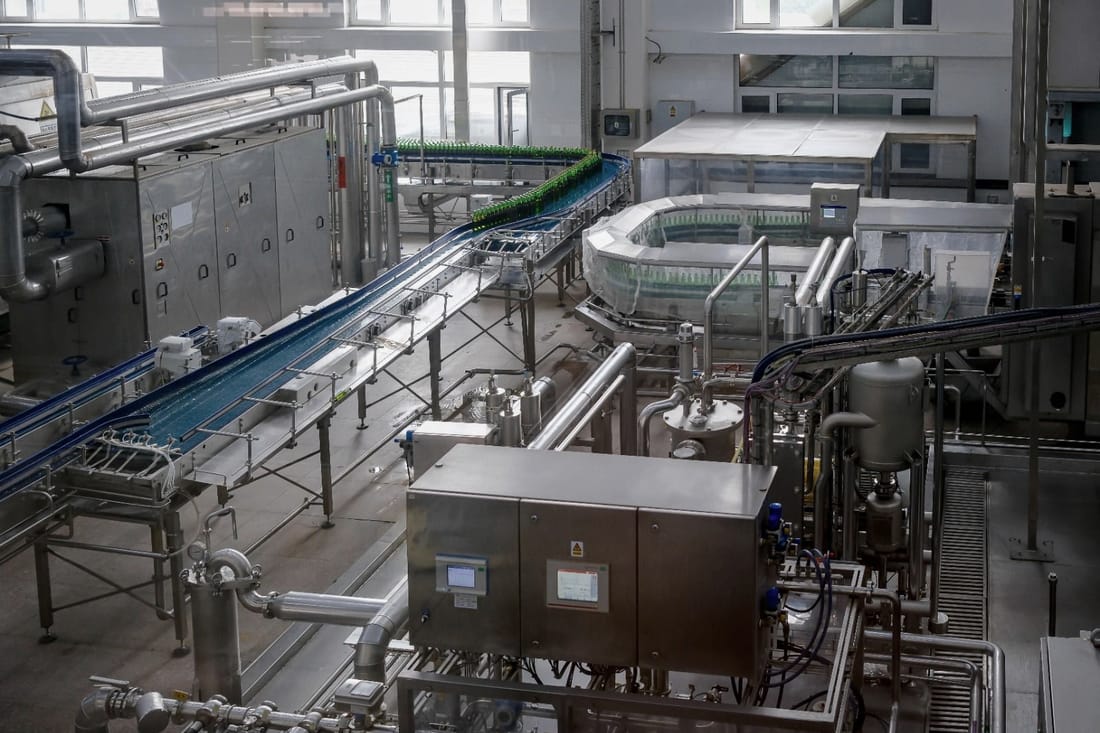
Food processing sprinkler systems in Kettering
Food processing sprinkler systems installed and serviced to BS EN 12845 and the LPC Rules, with tanks and fire pumps, checked against what the line now makes.
- ISO 9001, the certification insurers look for
- BS EN 12845 · LPC Rules
- Free survey, fixed price in writing, no travel charge
What is different about food processing
Food processing sprinkler systems usually need another look with a new line, a change of product, a cold store going in, or an insurer asking what the system was designed to deliver. Sentry Sprinkler Protection installs and services sprinkler systems for food processing, to BS EN 12845 and the LPC Rules. Food is the clearest example in the standard of why a building type is not a hazard class. Annex A of BS EN 12845 scatters food production across three groups: abattoirs and dairies at Ordinary Hazard Group 1, bakeries, breweries, chocolate and confectionery at Group 2, and corn mills, sugar and dehydrated vegetable and soup production at Group 3. Two identical units on the same estate can owe very different systems because of what happens inside them.
-
The product sets the class, and the product changes
A line that moves from chilled ready meals to dried ingredients has moved up the table without a single pipe being touched. This is the commonest way a food site stops being compliant quietly, and it is the first thing worth checking when a contract or a customer changes what the site makes.
-
Finished goods usually outrank the process
Annex A gives minimum classifications for the process. The warehouse at the end of the line is storage, and stacked packaging, plastics and palletised product can sit well above whatever the production floor is rated at. On most food sites the storage end, not the process end, is what decides the water supply.
-
Wash-down, corrosion and what it does to a system
Daily cleaning, steam, salt and temperature swings are hard on pipework, hangers and heads in a way an office never is. Corrosion is found at the fittings and behind the insulation rather than in the open, and heads clogged or coated by the process environment will not operate at the temperature they are stamped with. It is a reason the internal condition matters more here than the certificate does.
-
Cold stores cannot hold water
A wet system in a freezer is a burst waiting for a cold night, so cold and chilled areas run dry pipe or another arrangement designed for the temperature. That is a different system with a different maintenance regime sitting inside the same building as the wet one, and the two are frequently inspected as though they were one.
What we do for these buildings
- BS EN 12845 Sprinkler servicing The full BS EN 12845 routine, from the weekly gauge and alarm check to the annual service. Fire sprinkler servicing
- BS EN 12845 and BS 9251 Design and installation New systems, extensions and upgrades, designed, installed and commissioned. Fire sprinkler installation
- BS EN 12845 Sprinkler tanks The water supply behind the system, inspected, cleaned and replaced when it is past it. Sprinkler tank maintenance
- BS EN 12845 Fire pumps Electric and diesel sets proved under flow, not just started and signed off. Fire pump servicing
From first call to certificate
Four steps, the same on every job.
-
 01
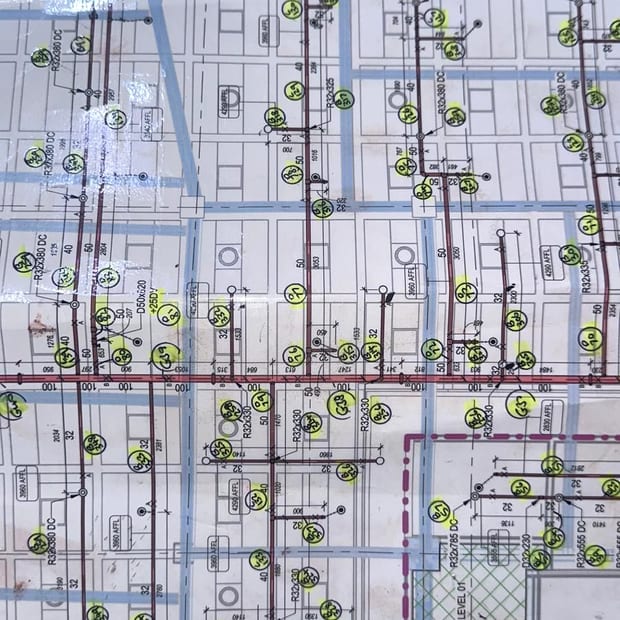
Free survey
We look at the building and its records, and tell you what it is due.
-
 02
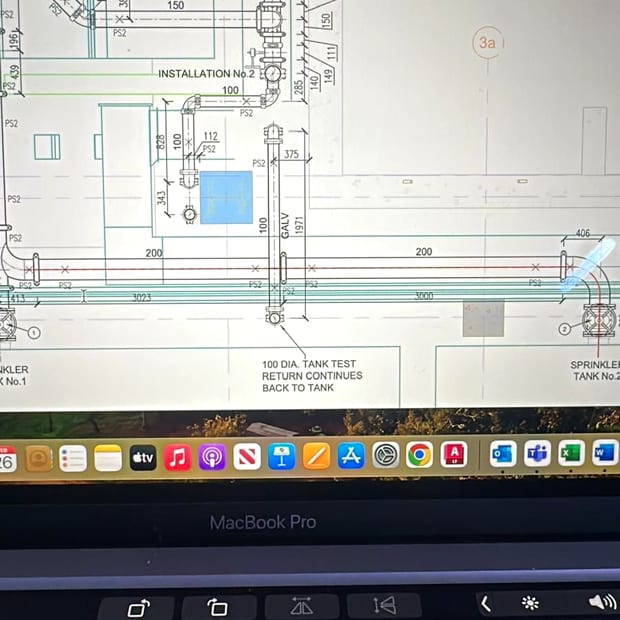
Fixed price in writing
Every item priced line by line. No survey fee, nothing added afterwards.
-
 03
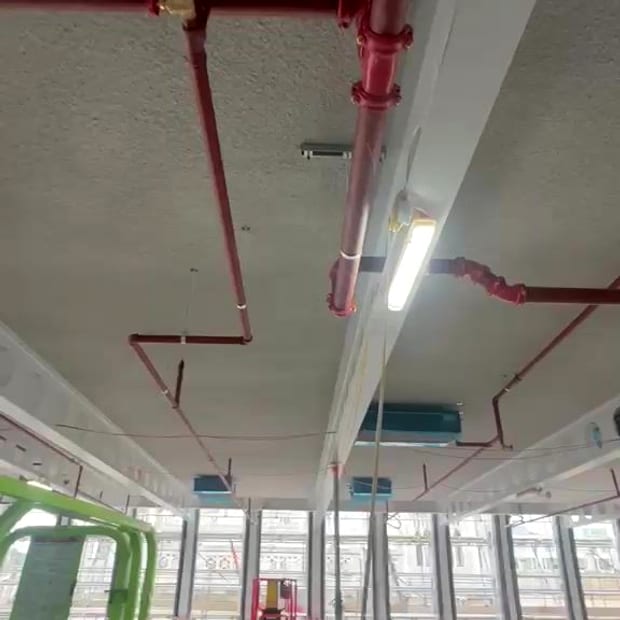
The work, on your dates
Isolation agreed before anyone arrives, kept as short as the job takes.
-
 04
Certificate and record
A certificate and a photographed defect list, ready for your insurer.
- Start
Book the free survey
Tell us the building. We will tell you what it is due.
Book a free survey
Free survey · fixed price in writing
Tell us what you need. We will tell you what it takes.
Four quick taps and your details. A free survey and a fixed price in writing, with no survey fee and no obligation.
Mon to Fri, 7am to 5pm. Emergencies any hour.
Request received
We’ve got it from here.
Step 1 of 5 is done. Here is how the rest goes.
- Request sent Done
- 2 We call you Next
- 3 Free survey
- 4 Fixed price
- 5 Work done
Food processing: questions
We have changed what we produce. Does the system still suit the building?
Possibly not, and this is the question worth asking first. Annex A of BS EN 12845 places food production across three ordinary hazard groups depending on the product, so a change of line can move the building up the table while the pipework stays exactly where it was. It is a survey question: what is made now, what is stored now, and what the system was designed to deliver.
Our plant gets washed down every day. Is that a problem for the system?
It is the thing that ages a food site system fastest. Water, steam, cleaning chemicals and temperature cycling attack fittings, hangers and heads, and the damage shows up at joints and behind insulation rather than somewhere you would notice walking the floor. Heads coated by the process environment are the other common find, because a coated bulb does not respond at the temperature it is marked with.
What happens to the system in the cold store?
It should not be a wet system. Water in a freezer freezes, and a frozen pipe is both useless and a burst waiting to happen, so cold areas are designed dry or with another arrangement suited to the temperature. Practically that means one building with two systems in it, on different regimes, and the cold side is the one most often left out of a routine written for the warm side.
Can the annual be done without stopping production?
The non-intrusive checks, yes. The annual needs isolation, and on a food site that is usually planned into a cleaning down period or a shutdown rather than fought against. Where the system has zone valves it can be taken area by area so the rest of the site keeps running. We agree the plan, and what the site is operating on while a zone is down, before the visit.
Worth reading first
- Sprinklers Sprinklers in warehouses: why racking changes everything A warehouse sprinkler system is designed against a specific storage height, storage arrangement and commodity class. Raising the racking, changing what is stored or adding racking under a roof-only design can leave the system unable to control a fire it was never designed for.
- Compliance What your insurer actually wants from a sprinkler system Insurers price a sprinkler system as risk mitigation only if they can trust it. Who installed it, what it was designed to and an unbroken maintenance record are what make it count.
- Sprinklers How often should sprinklers be serviced? Under BS EN 12845, sprinklers are checked weekly by the site, checked monthly for water and fuel, tested quarterly, given an interim contractor service every six months and a full service once a year, with the pump proved under flow.
The published documents behind this page
Every interval and threshold on this page comes from one of these. Links go to the publisher, not to a copy of the document.
- BS EN 12845Fixed firefighting systems. Automatic sprinkler systems. Design, installation and maintenance
The standard commercial and industrial sprinkler systems are designed, installed and maintained to. It sets the weekly, monthly, quarterly and annual routines.
BSI
- LPC RulesLPC Rules for Automatic Sprinkler Installations, incorporating BS EN 12845
The insurer-facing ruleset that sits alongside BS EN 12845. Part 1 is the standard itself; the technical bulletins in Part 2 are what an insurer means by property protection.
Fire Protection Association
British Standards are copyright documents and most are bought rather than read free. We hold the ones we work to. If you need to know what one of them says about your building, ask us rather than buying it.
Certified, and audited on a schedule.
ISO 9001, certified by BRE Global and accredited by UKAS. Somebody independent audits how every job is planned, recorded and signed off, on a schedule.

ISO 9001:2015
Certified by BRE Global, accredited by UKAS
An audited quality management system. It means the way a job is planned, recorded and signed off is itself inspected by somebody independent, on a schedule.
Working to BS EN 12845, BS 9251 and BS 9990. If your insurer or fire risk assessor wants the certificates themselves, ring us and we will send them over.
5.0 on Google
3 reviews, and every one of them five stars.
-
Lewis W. Sprinkler installation, warehouse Had them install a full sprinkler system across one of our warehouses, and couldn't be happier. They were professional from start to finish and the on-site team were genuinely friendly to work with. […] Highly recommend if you would need your building or warehouse properly fire-protected.
5 stars on Google
-
Mike C. Weekly maintenance, testing and repair Sentry Sprinkler Protection have recently taken over the weekly maintenance, testing and repair of the […] sprinkler equipment. They are providing a excellent service, good value and they are also very helpful when on site.
5 stars on Google
-
Sam E. Sprinkler pipework installation Couldn't recommend [Sentry] enough. Their work ethic, consistent efficient install of the pipework and overall approach to a project should be something every sub-contractor strives to mirror. Marius is incredibly approachable and methodical in his work with laydown areas kept very neat and tidy and all work carried out in a safe manner.
5 stars on Google
Tell us the building. We will tell you what it is due.
No survey fee to find out where you stand. Describe the site and we will tell you which intervals apply and what the visit involves.
Request received
We’ve got it from here.
Step 1 of 5 is done. Here is how the rest goes.
- Request sent Done
- 2 We call you Next
- 3 Free survey
- 4 Fixed price
- 5 Work done