
Wet riser systems in London
Wet riser systems in London tested and serviced under BS 9990: riser, landing valves, pumps, break tank and alarms, recorded floor by floor.
- ISO 9001, the certification insurers look for
- Free survey, fixed price in writing, no travel charge
- Office Monday to Friday, 7am to 5pm; emergency line any hour
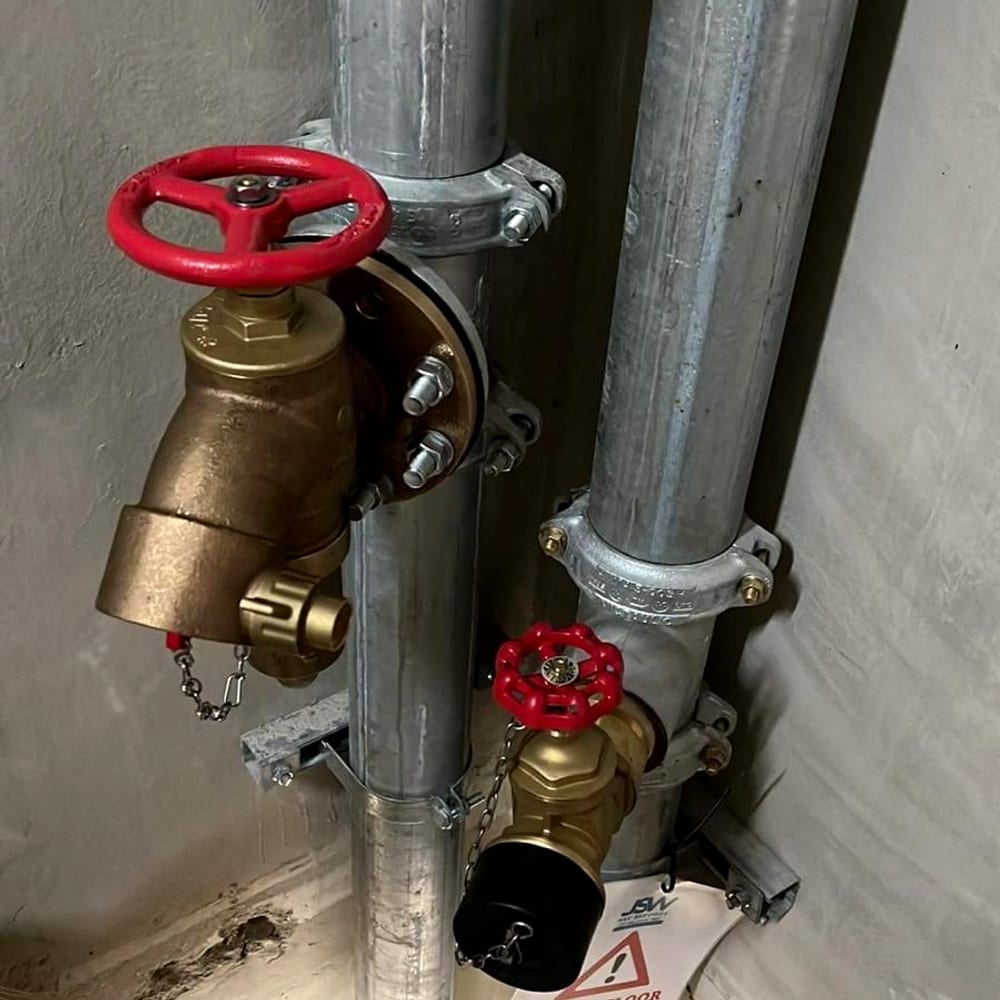
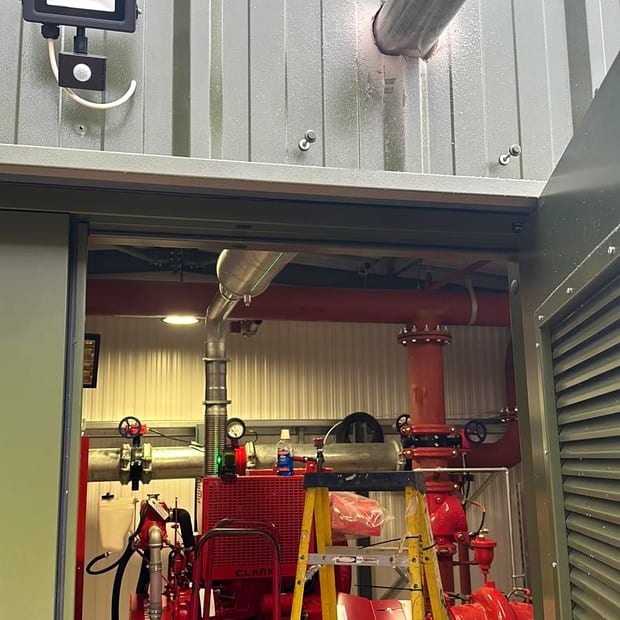
Wet riser systems in London are found in the buildings tall enough to need them. Above 50 metres a brigade pump cannot reach the upper floors, so the riser is kept charged by its own pumps and tank. We test and service the whole system under BS 9990, riser, landing valves, pumps, break tank and alarms together, and record the result floor by floor. Sentry Sprinkler Protection does this work across England from its base in Kettering, ISO 9001 certified.
One system, five parts
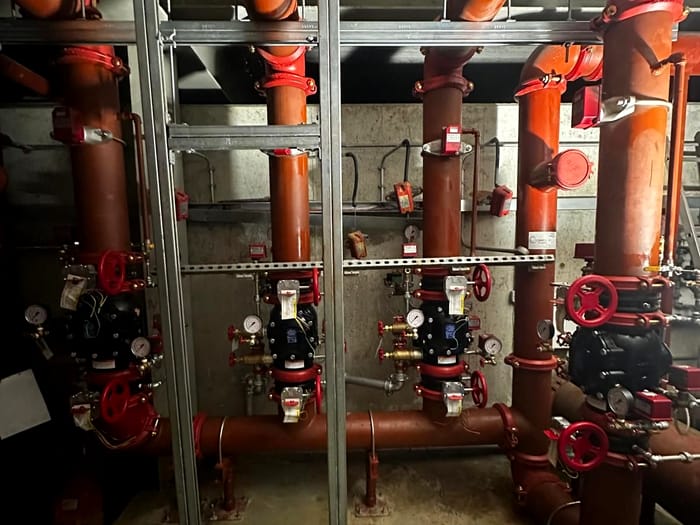
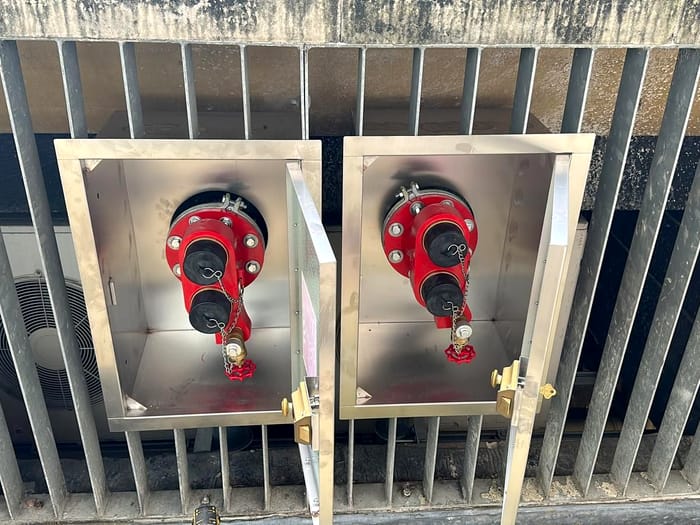
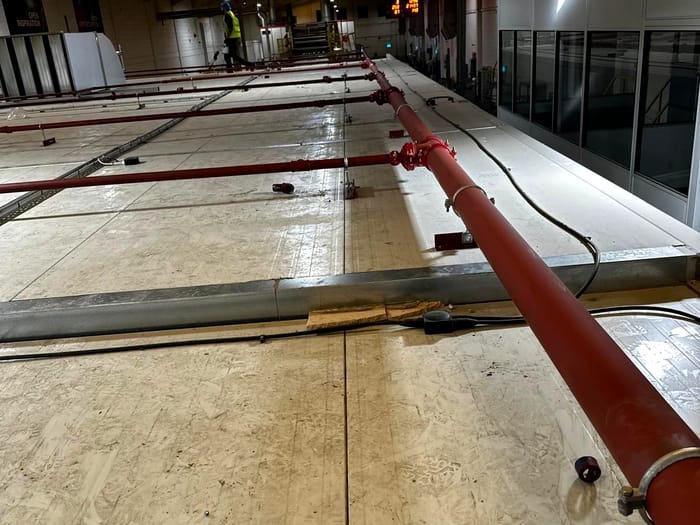
- The riser and every landing valve, checked for pressure and flow at the outlets.
- The duty and standby pumps, run and proved against their duty.
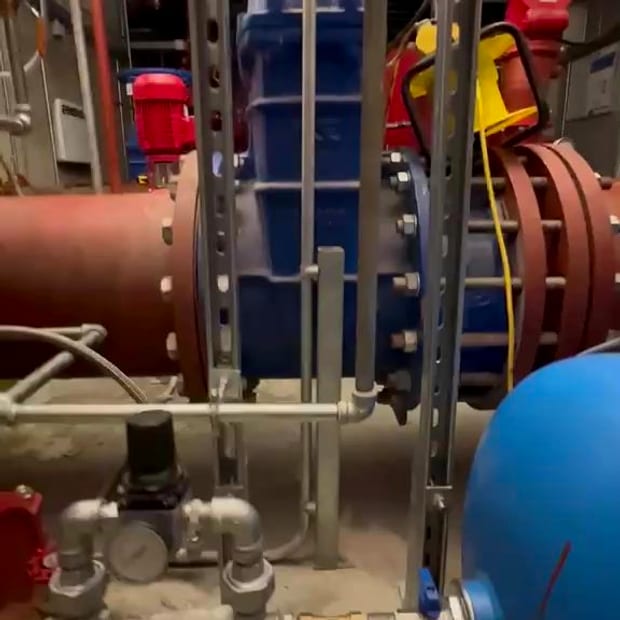
- The break tank, its infill and the level alarms.
- The pressure relief valve and the drain.
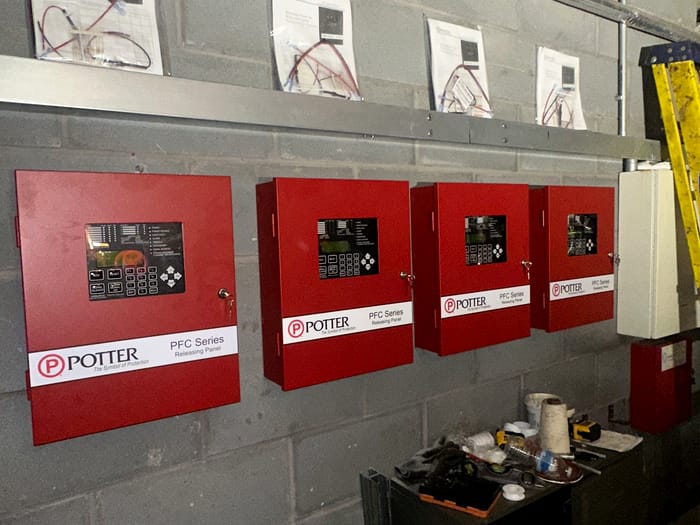
- The control panel and the alarm signals it sends.
Sound pipework with a pump that will not reach duty is not a working riser, which is why the parts are tested as one.
One schedule per building
BS 9990 sets a six-monthly inspection and an annual test, and the pumps and tank behind a wet riser need proving on the same visits. Where the building also has a dry riser in its lower floors or a sprinkler system, all of it goes on one schedule with one set of records.
Water on occupied floors
Flow testing at landing valves means hoses, water and drain points on floors where people live or work. We agree the floors, the times and the drainage with the building manager in advance, and protect finishes on the day.
Faults we find
Pumps that will not start on demand, failed pressure switches, level alarms that never sound and landing valves seized shut are the usual ones. Each is photographed, priced and repaired on a return visit, and the system is tested again.
Related
- Dry riser testing in London Six-monthly inspections and annual pressure tests on London towers, planned around access.
- Commercial sprinkler maintenance in London Offices, hotels and car parks on a fixed BS EN 12845 schedule.
- Fire sprinkler installation in London Residential towers, fit-outs and car parks: designed, installed and commissioned.
- Wet riser servicing Charged risers, their pumps and their tanks, tested together because they only work together.
- Fire sprinkler systems in London
- Fire pump servicing
- Areas we cover Every page in this list, grouped by job.
From first call to certificate
Four steps, the same on every job.
-
 01
Free survey
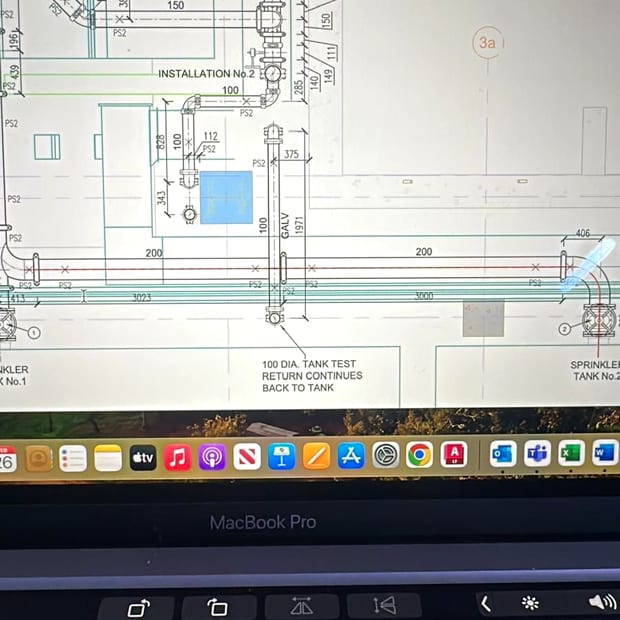
We look at the building and its records, and tell you what it is due.
-
 02
Fixed price in writing
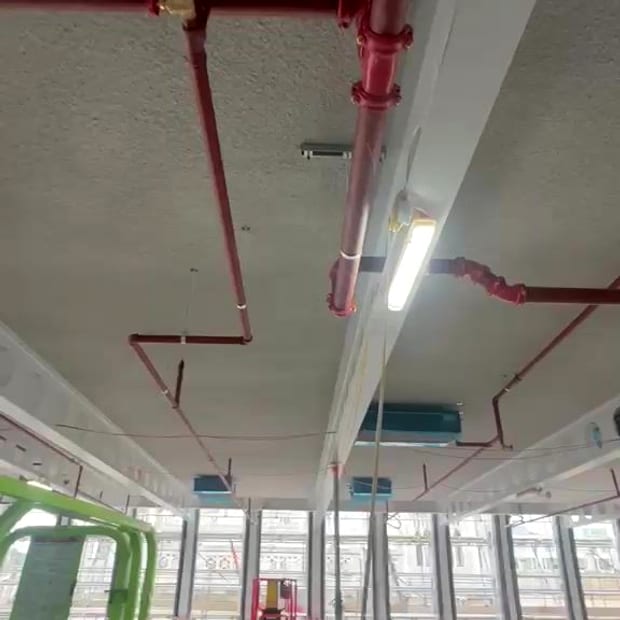
Every item priced line by line. No survey fee, nothing added afterwards.
-
 03
The work, on your dates
Isolation agreed before anyone arrives, kept as short as the job takes.
-
 04
Certificate and record
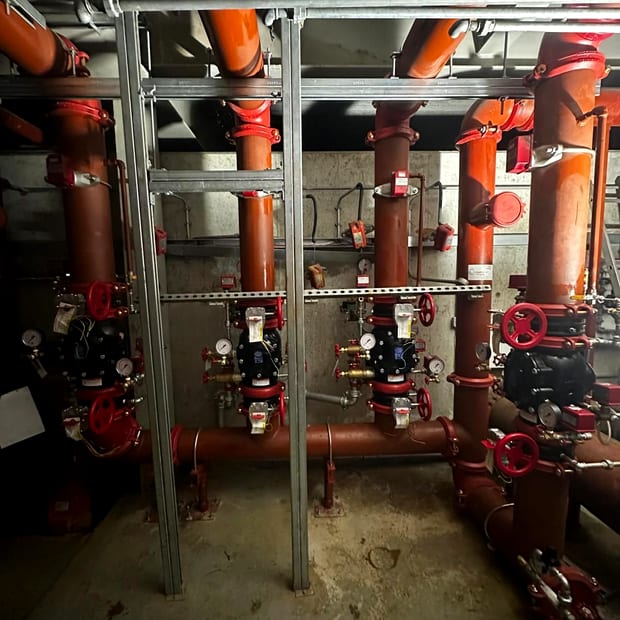
A certificate and a photographed defect list, ready for your insurer.
- Start
Book the free survey
Tell us the building. We will tell you what it is due.
Book a free survey
Free survey · fixed price in writing
Tell us what you need. We will tell you what it takes.
Four quick taps and your details. A free survey and a fixed price in writing, with no survey fee and no obligation.
Mon to Fri, 7am to 5pm. Emergencies any hour.
Request received
We’ve got it from here.
Step 1 of 5 is done. Here is how the rest goes.
- Request sent Done
- 2 We call you Next
- 3 Free survey
- 4 Fixed price
- 5 Work done
Questions about wet riser systems in london
Which London buildings need a wet riser?
Buildings with a floor more than 50 metres above fire service access. Below that, from 18 metres, a dry riser is the minimum, which is why most London towers below 50 metres have a dry one.
Is a wet riser serviced differently from a dry riser?
Yes. A dry riser is an empty pipe the fire service fills on arrival. A wet riser is charged all the time, so its pumps, tank and alarms have to be proved as well, and each visit takes longer.
Can you take over the servicing of an existing wet riser?
Yes. We start with a survey of the pumps, the tank, the controls and the last test records, and set the schedule from what we find.