
Dry riser testing for housing associations in Kettering
Dry riser testing for housing associations: every block inspected six-monthly and pressure tested yearly under BS 9990, with a certificate on file for each.
- ISO 9001, the certification insurers look for
- Free survey, fixed price in writing, no travel charge
- Office Monday to Friday, 7am to 5pm; emergency line any hour
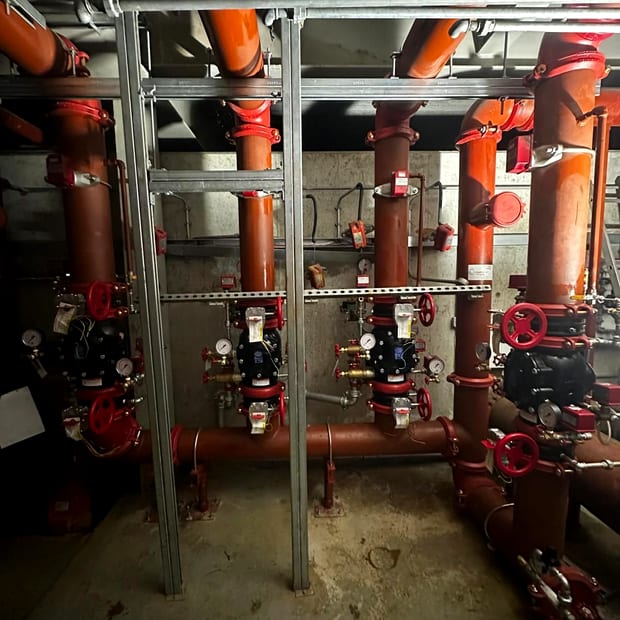
Dry riser testing for housing associations covers every block in your stock with a dry riser. Under BS 9990 that means a visual inspection every six months and a pressure test once a year, with the certificate for each block on file. As landlord you are normally the responsible person for the common parts, so a missed test is your finding, not your contractor's. Sentry Sprinkler Protection does this work across England from its base in Kettering, ISO 9001 certified.
Social housing dry riser testing on one schedule
Send us the list of blocks. We set the six-monthly and annual dates for each and keep them in step, so no block falls out of the cycle when a contract changes.
Residents and access
The annual test needs every landing valve reachable and water at each floor, so residents need notice and cabinets need to be open.
We agree the dates with your housing team early, and keep each visit as short as the work allows.
Damage at ground level
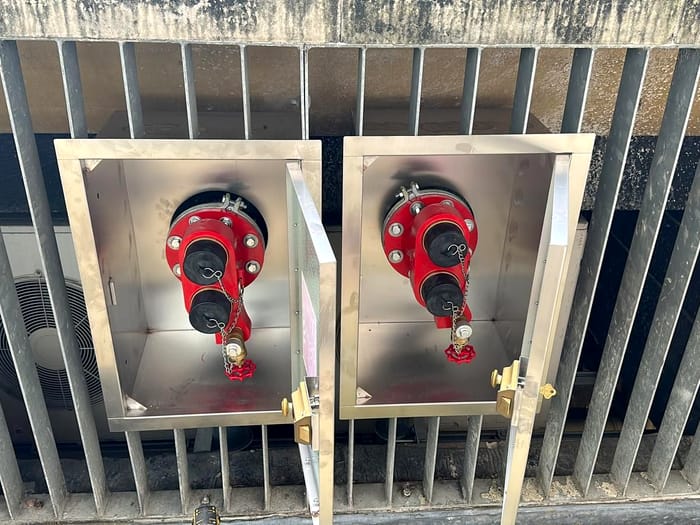
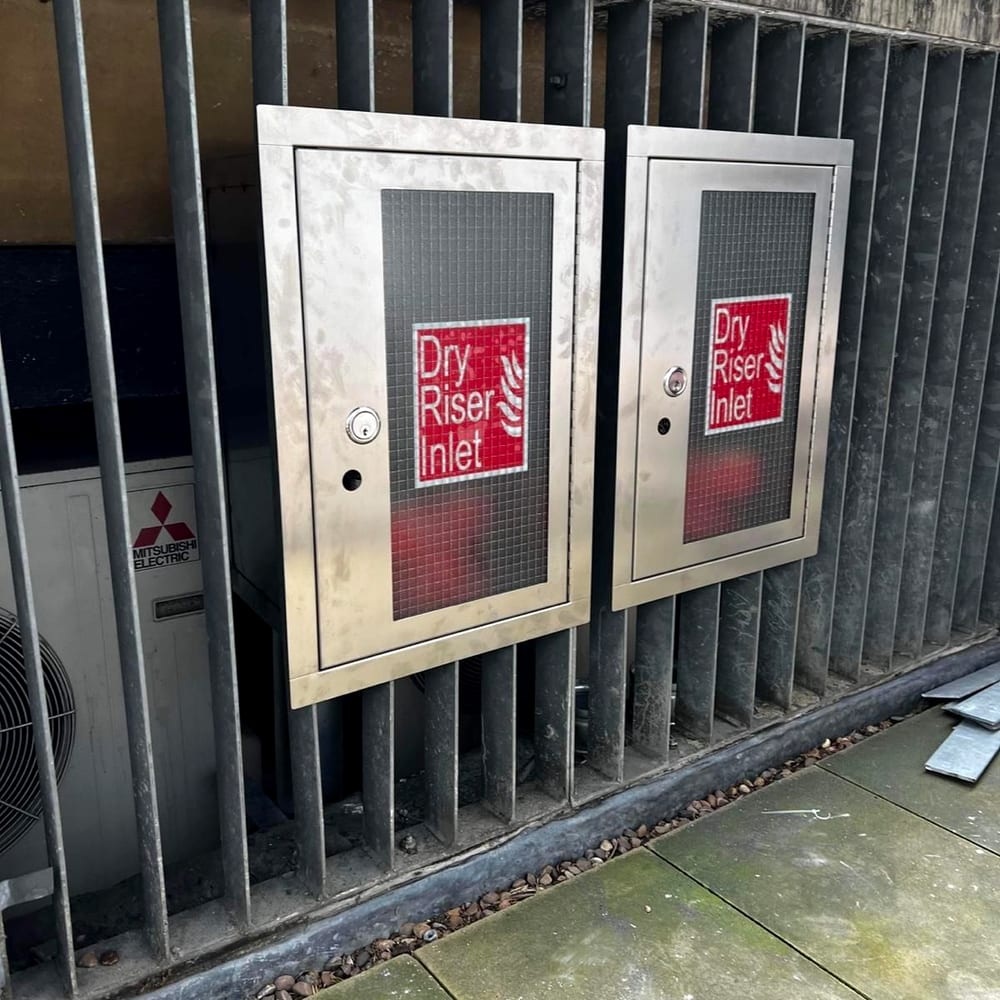
In residential blocks the inlet is the part most often damaged: missing caps, broken glass, cabinets forced open or blocked by bins. Each fault comes back with a photograph and a fixed price, then a retest and a new certificate once the dry riser repairs are done.
Sprinklers and wet risers in the same blocks
New blocks above 11 metres in England have sprinklers, and buildings above 50 metres have wet risers. We can put all of it on the same schedule, with one record per building.
Related
- Dry riser testing for managing agents Every block inspected and tested on one schedule, certificates issued on the day.
- Sprinkler servicing for housing associations Residential and mixed-use systems serviced on one schedule, with records ready for audit.
- Sprinkler servicing for student accommodation BS 9251 servicing planned around the academic year, every block on record.
- Dry riser testing Six-monthly inspection and the annual pressure test, with the certificate your fire risk assessment asks for.
- BS 9990 explained: what a dry riser owes, and when
- What is a dry riser, and how does it work?
- Who we work for Every page in this list, grouped by job.
From first call to certificate
Four steps, the same on every job.
-
 01
Free survey
We look at the building and its records, and tell you what it is due.
-
 02
Fixed price in writing
Every item priced line by line. No survey fee, nothing added afterwards.
-
 03
The work, on your dates
Isolation agreed before anyone arrives, kept as short as the job takes.
-
 04
Certificate and record
A certificate and a photographed defect list, ready for your insurer.
- Start
Book the free survey
Tell us the building. We will tell you what it is due.
Book a free survey
Free survey · fixed price in writing
Tell us what you need. We will tell you what it takes.
Four quick taps and your details. A free survey and a fixed price in writing, with no survey fee and no obligation.
Mon to Fri, 7am to 5pm. Emergencies any hour.
Request received
We’ve got it from here.
Step 1 of 5 is done. Here is how the rest goes.
- Request sent Done
- 2 We call you Next
- 3 Free survey
- 4 Fixed price
- 5 Work done
Questions about dry riser testing for housing associations
Who is responsible for dry riser testing in social housing?
The responsible person under the Regulatory Reform (Fire Safety) Order 2005. For a block owned by a housing association that is normally the association as landlord, for the common parts.
What does the dry riser certificate show?
That the riser held 12 bar for 15 minutes, the date of the test, and any defects found. It is the document your fire risk assessor and insurer will ask for.
Can you test risers in occupied blocks?
Yes, almost all of them are. Residents need notice and the drain-down needs somewhere to go, and the visit is planned around both.